Showing posts with label Kitchen Garden. Show all posts

Monday, May 23, 2011

Kitchen Garden


Bloomtown_kitchen_garden_9931_blog_1
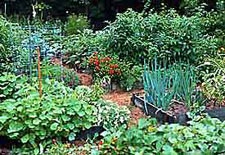
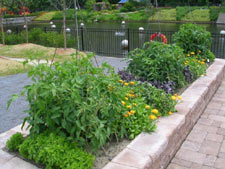
A photo showing the overall layout of the kitchen garden is posted above.
The planting beds are raised. In addition to providing an ideal growing situation for a variety of edibles, the changes in elevation coupled with the angular lines contribute to a more interesting space.
The back "wall" is an open wire mesh suitable for supporting tomatoes and vining plants. The top of the fence is embellished with an iron, stone & glass element fabricated by Keith Yurdana of Taproot. Some detail photos of the finials are posted below.
Bloomtown_kitchen_garden_trellis_detail__2 Bloomtown_kitchen_garden_finial_9939_blo_1 Bloomtown_kitchen_garden_trellis_detail__1  http://bloomtown.typepad.com/bloomtown/2006/08/kitchen_garden.html

Delicious Beauty: The Successful Kitchen Garden

With their network of paths, colorful rows of crops and decorative interplanting, successful productive gardens provide a feast for the eyes as well as for the table. Learn key ingredients to make your own productive garden.
Ordered Design of Productive Garden Simple Steps: Vegetable Gardening ©Dorling Kindersley Limited 2009
Growing food close to home is not only fun, but also allows you to enjoy fruit and vegetables that are either not available in stores or are too expensive to consider purchasing. In a kitchen garden the layout and surfaces are functional, creating a sense of ordered, attractive abundance: geometric beds filled with herbs and vegetables, and taller plants, such as a bay tree or standard rose, planted as a focal point.
Kitchen gardens need to be planned carefully to make them easy to manage, and beds
should be planted with different produce each year so as not to exhaust the soil; to extend the growing season, greenhouses and cold frames can be used. You can achieve a more flowery feel by including ornamental plants, such as lavender hedging, colorful clumps of dahlias and drifts of nasturtiums.
Pathways are usually made of brick, stone or concrete, and should be wide enough to accommodate wheelbarrows and space for you to work the beds easily without disturbing the planting. Dwarf boxwood hedging or wood are often used to provide neat edging. As an alternative, divisions between different areas can be created with fruit trees such as dwarf apples or pears, trained along wires to make beautiful screens that both flower and fruit.

Design Influences and Key Design Elements

The roots of modern kitchen gardens can be seen in the walled gardens of the Victorian country houses, where aristocrats cultivated exotic species and grew fresh food for the whole household.
Much like today, crops were set out in orderly lines in geometric beds edged with boxwood, and separated by paths made of gravel, tamped-down soil or industrial ash. Tender fruit trees were trained along south-facing walls that radiated heat to protect them from hard frosts, while soft fruits were grouped together under netted frames to defend them against birds.
Long, heated greenhouses were often incorporated into the structure of the wall, allowing early cropping and the cultivation of tender produce, such as peaches and apricots.
Traditional Walled Kitchen Garden Crops in OrderEnlarge Photo+Shrink Photo-Simple Steps: Vegetable Gardening ©Dorling Kindersley Limited 2009

Raised Beds

Raised beds were first introduced to improve drainage, but they also provide a sense of order. For people with limited mobility, beds can be raised to up to 3 feet.
Raised Beds Improve Drainage and Provide OrderEnlarge Photo+Shrink Photo-Simple Steps: Vegetable Gardening ©Dorling Kindersley Limited 2009

Wide Paths

Pathways should be at least 3 feet wide in order to make the garden easy to navigate. Hard surfaces, such as brick, stone slabs or gravel are ideal since they withstand heavy everyday use.
Pathways Make Garden Easy to NavigateEnlarge Photo+Shrink Photo-Simple Steps: Vegetable Gardening ©Dorling Kindersley Limited 2009 

Rustic Obelisks

Ornamental features are always put to good use in productive gardens. Trellis and wooden or metal obelisks create height and rhythm in the garden, but also provide support for climbers, such as runner beans or sweet peas.
Ornamental Features Provide Support in GardensEnlarge Photo+Shrink Photo-Simple Steps: Vegetable Gardening ©Dorling Kindersley Limited 2009

Planting in Rows

Crops planted in rows can be easily watched, cared for and harvested, and the spaces between rows provide access for weeding. A geometric layout gives these beds their unique character.
Crops Planted in Geometric Rows in Edible GardenEnlarge Photo+Shrink Photo-Simple Steps: Vegetable Gardening ©Dorling Kindersley Limited 2009

Practical Decoration

Terra-cotta rhubarb forcers and plant pots are practical and provide traditional decoration. Patterned brick or pebble paths, and arches for cordons, also make attractive features.
Terra Cotta Rhubarb Forcers and Pots are PracticalEnlarge Photo+Shrink Photo-Simple Steps: Vegetable Gardening ©Dorling Kindersley Limited 2009  http://www.hgtv.com/landscaping/productive-style-garden/page-2.html

Saturday, April 30, 2011

AN ABUNDANCE OF POTATOES.


With a bit of luck I can manage to grow several crops of potatoes each year, planting the first seed potatoes in October with a further planting after Christmas. Potatoes will handle quite rough soil so are a good crop to put into new ground. They are not a deep rooted plant like carrots, which will push down into the soil. Instead, the tubers grow out from the original seed potato. It is necessary to hill them as the plants grow to cover the young tubers. If you keep building up the soil around the stem of the plant they will continue to make fresh tubers in ever increasing layers. This may also be done by creating a support for the soil with rubber tires mounted on rubber tires. This is a great way of cropping for people with limited gardening space. Using this method it is also possible to grow potatoes in the milder winter climates, providing the tops are covered each night against frost.
Potatoes are well suited to growing in furrows which can be flooded with a garden hose and is the way I prefer to grow mine. To get an early start this year I planted two rows of seed potatoes in October amongst the red Flanders poppies in my Remembrance Field at Das Helwig Haus B&B at Glen Aplin on the Granite Belt of southern Queensland.
Potato rows
Potato rows
Three young Koreans came in November to work for me as WWOOFers – Willing Workers on Organic Farms and as the poppies finished flowering they removed them and hilled the potatoes.
Hilled potatoes
Hilled potatoes
Meanwhile I had planted a later patch of potatoes, a different variety, on the opposite corner of the field. My non-organic vegetable farming neighbors when given fresh potatoes in February, asked what chemicals I had used on the crop?
I replied, “None.” One of the secrets to growing good crops of any vegetable is to rotate your crops and never grow potatoes in the same place for at least 3 years. Repetitive growing of the same vegetable in the same ground each year will not only result in depletion of soil nutrients essential to that plant, but also a build up of pests – either leaf feeders or root borers. Potatoes appreciate feeding on rich compost or manures and need plenty of water during the growing season. I prefer to buy fresh seed potatoes each year, rather than use left over shooting potatoes from my pantry to avoid spreading any disease.
A second crop of potatoes.
As the leaves ripen up the plants tend to fall over to the side and it is important at that time to ensure the tubers close to the surface are covered with additional earth or a mulch of hay to prevent sunburn and greening. Any potato exposed to the sunlight will acquire green skin. This green portion of the potato is poisonous and any potato showing green should be peeled deeply, or discarded.
Korean Wwoofers digging potatoes
Here the three Koreans (Ashley, Jack and Jinni) were harvesting Sebago potatoes. Jack is using a brand new stainless steel digging fork, which my father gave me for a Christmas present. The other varieties I grew were Kennebeck and Desiree. Again to avoid possible contamination of my soil, I do not compost my potato greens, but burn them. If it is possible to establish a different place each year where you can burn garden waste and then plant vegetables like melons or pumpkins in the ash, you will be rewarded with excellent crops as the heat destroys the natural pathogens lurking in most soils.
Jack washing the potatoes.
The potatoes were washed, sorted according to size and stored in our cellar room at 8 degrees Celcius.
Stored potatoes
Stored potatoes
I’m sure you know many ways of serving potatoes, but have you ever made your own potato crisps?
  • Choose small to medium potatoes of an even size.
  • Wash potatoes, but don’t peel.
  • Slice the potatoes as thinly as possible. I have a meat slicer which cuts much thinner and neater slices than I could manage with a sharp knife.
    Slicing potatoes.
    Slicing potatoes.
  • Thread the potato slices on to wooden skewers.
  • Sprinkle salt or other flavoring over the potato slices.
  • Suspend three skewers across a microwave safe bowl.
  • Place the bowl in a microwave oven and cook for 7-10 minutes. The time required will depend on the thickness of your slices.
  • Remove from the microwave oven, cool and strip off the skewer.
  • Store in an airtight container for future use as potato crisps.
    Raw, salted potato slices.
    Raw, salted potato slices.

    Cooked potato crisps.
    Cooked potato crisps.
  http://fayhelwig.com/self-sufficiency/green-garden-12/#more-795

The Best Tomatoes for Sauce: San Marzano Tomatoes


Ask any chef and they’ll tell you that San Marzanos are the best tomatoes for sauce.
The flesh of San Marzanos is thicker and meatier than other sauce tomatoes, they have fewer seeds, a bolder flavor, and they’re less acidic. The end result? These tomatoes just melt into sauces.
To prep San Marzanos for sauce, you first have to remove the skin. Fill a large pot with water and bring to a boil. Drop in a few San Marzanos (you may have to work in batches) and boil until they’re skins start to blister (about 1-3 minutes). Remove the tomatoes from the water using tongs, a slotted spoon, or a Chinese skimmer and immerse them in a bowl of ice water. Once the tomatoes are cool enough to handle, use your hands to peel off the skins.
Next, chop off the tops of the tomatoes and slice away any tough flesh, bruises, or rot spots. To remove the seeds, cut the tomato in half lengthwise and gently scrape out the seeds using a small spoon or your finger. At this point, the tomatoes are ready to be frozen or canned.
Removing the skins and seeds from San Marzanos makes for an extra velvety sauce. Try using San Marzanos in this simple Garlic Tomato Sauce for pasta or pizza. They’re also perfect in ratatouille.
Look for fresh San Marzano tomatoes at your local farmers market. You can also find canned San Marzanos in specialty stores or larger grocery chains. http://eatdrinkbetter.com/2010/08/10/san-marzano-tomatoes-the-best-sauce-tomato/

Tuesday, April 26, 2011

How Can I Save Cucumber Seeds?

Cuke Seeds
How can I save seeds from cucumbers that I grow?
In order to save seeds from cucumbers, you must let them thoroughly ripen on the vine. They will enlarge and turn yellow. They should stay on the vines until the vines are dead. Bring the cucumbers into the house and let them ripen further on a dry shelf in the pantry (or someplace out of direct sunlight). When the cucumbers begin to turn soft, scoop out the seed mass and put it into a large jar of water. Let the seeds ferment for five days, thenseparate the scum from the good seeds that have sunken to the bottom. Rinse the seeds in a colander, then dry hem on screens for at least three weeks, or until the seed snaps when bent in half. Store the seed in airtight containers, label and date clearly. Store the containers in a cool, dark place free of humidity. Seed processed properly will remain good for at least eight to 10 years.
William Woys Weaver, contributing editor, MOTHER EARTH NEWS and Gourmet magazines
Photo by IStockPhoto/Maris Olsteins

http://www.motherearthnews.com/ask-our-experts/saving-cucumber-seeds.aspx

Monday, April 18, 2011

Veg-Gardening Show "Not in Current Strategy" for DIY Network

Lampl
So I guess a how-to, home vegetable gardeningseries isn’t appealing enough to rebroadcast this year…the year that growingyour own food is the hottest trend in gardening and a hot topic period. Nevermind that the series already exists…in the can…paid for…and prime fodder for ahungry audience. A large audience mind you that is desperately seeking helpfuladvice specifically on this topic (many for the first time) and trying to dothe right thing in a more local and sustainable world.

The series I refer to is Fresh from the Garden onthe DIY Network. I am well acquainted with this unique and informative series,as I was its only host. It really was a brilliant concept. Each episode featuredone or two different vegetables while demonstrating everything you needed toknow to grow that particular plant, from seed to harvest in a single 30-minuteepisode. Never before or after have I seen such a series. We completed 52informative and comprehensive episodes, covering just about every vegetable youcould possibly grow over three years of taping the series around Atlanta,Georgia.
Since the production wrap in late 2005, it hasaired every year since. That is until now. I had not seen anything on the DIYNetwork website or program schedule touting it’s return for 2009. So I sent anemail to the VP of Programming. My inquiry was simple; “do you have plans toair Fresh from the Garden this year” I asked? After not getting a reply to myfirst inquiry, the response to my second inquiry was quick and to the point. “ThanksJoe- to my knowledge, we will not be airing the show”.

Well that was a shock! Ihad to know more and at the same time, state my case as to why of all years,when finally this series is primed for a bigger and more eager audience thanever, it wasn’t going to be out there. I replied to his response stating thispoint and more. Again, the reply was quick and succinct; “Thanks Joe-I hearyou, but unfortunately, it doesn't fit our current programming strategy”.

I passed the reply on tomy producer of that series, also eager to hear what they had to say. She wasnot surprised. In her conversations with the DIY Network execs, they’re goingfor a much more edgy style these days. I guess the ancient series I did withthem is so old style.

I needed to know more.Just to see if I could get a little insight for myself right from the source, Ireplied to this latest response with one last question; “could you briefly sumup the current programming strategy for me? It would be very helpful (in myrole as gardening communicator) to have a sound bite from an authority so I'llbe better equipped to answer when this question comes up again (as it doesoften!)”. Not surprisingly, this time there was no reply.

It was an honest question.What IS the programming strategy? If we can’t get an established network (partof the HGTV, Food Network, Fine Living family) to rebroadcast a show that isnow more timely now than ever, on such an important and exploding topic and sopertinent to their audience and for no additional production cost, then I’m notholding out much hope for any new gardening shows any time soon folks. Eitherthey’re not getting sponsors (very likely) or the execs that decide what makesit on the air, don’t see that gardening is important enough to get thecoverage. Am I wrong here? I hope not but until someone tells me otherwise,(and I welcome a response from DIY or any network) I’ll stand my ground on thisone.

What do you think? Is gardening,and vegetable gardening specifically, off the radar for “programming strategy”or is it just the lack of edginess and excitement of a four-year-old series? Idon’t mind passing the baton to the 20 something hipster host, but is that allit’s about anymore? Seriously!
About the photo: It happens to be the garden I started from scratch from bare ground just four months before this pic was taken and is also the very garden where we shot the last year of our series, Fresh from the Garden on DIY Network. It may look large but it is only 40 x 60 feet. I've had so many great emails and comments from viewers telling me how much they learned and enjoyed series. It's a shame I have to let them know it won't be coming back on this year!  http://www.gardenrant.com/my_weblog/2009/02/

Monday, April 11, 2011

Soil Common Sense

All great plants start with great soil. Spend extra time building the soil and you'll be rewarded with a healthier garden.
 The soul of your garden is the soil. A healthy soil translates into a healthy garden. But before you begin adding compost, manure, fertilizer, lime, and other soil amendments, you need to know what type of soil you have and its properties. Clay, silt, and sandy soils all behave differently and have different needs.

Here's some information on your soil texture and structure, and some simple home tests you can do to determine the type of soil you have and it's health.

Soil Texture: What You Inherit

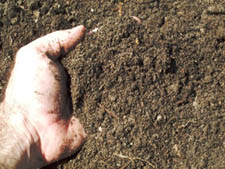
Soil is comprised of air spaces and organic matter, but mostly mineral particles. There are three kinds of soil minerals: sand, silt and clay. The relative percentage of each of these particles in the soil determines its texture. Soil texture won't change unless you literally excavate your soil and replace it.
Sand has the largest soil particles (.4- to .01-inch diameter) and the largest pores between particles. A soil with 50 percent sand tends to drain well and, dry out and warm up quickly, but it also tends to be less fertile and it doesn't hold moisture well throughout the season.
Silt soil particle size is between clay and sand (.01- to .0001-inch diameter). The characteristics of silty soil are similar to those of clay, but are moderated by its larger particle size.
Clay soil has the smallest soil particles (less than .0001-inch diameter) and the least amount of water and air spaces between particles. Consequently, a soil with at least 50 percent clay will have all the opposite characteristics of sand. It drains, dries out, and warms up slowly, but is very fertile and, once wet, holds water well.

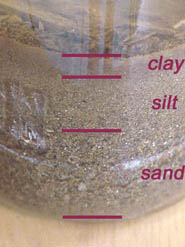
Using a jar test, you can determine the percentage of clay, silt and sand in your soil.

Soil Structure: What You Make

The way sand, silt, and clay particles are grouped together in aggregates is called the soil structure. The size and arrangement of these aggregates influence the nutrient availability and drainage of the soil.
Whether you have dry, sandy soil; silty soil; or wet, heavy clay soil, adding organic matter in its many forms will improve the soil structure. The ideal amount of organic matter in most soils is between 5 percent and 10 percent. Organic matter helps any soil become more like the ideal loamy soil. Here's how.
Microorganisms feed on organic matter and produce polysaccharides. Polysaccharides help form humus, which enables small clay or silt particles to stick together to form larger aggregates. Larger aggregates create more pores for water and air to flow. The soil drains better, the plants grow better because of the increased pore space, and more nutrients are available.
In sandy soils, humus acts like a sponge to catch and hold moisture. Humus also helps accumulate nutrients, making a sandier soil more fertile.

Soil pH: Acid or Alkaline?

The pH of soil is a measure of the sweetness (alkalinity) and sourness (acidity) of the soil. It is measured on a scale of 1 to 14. A soil pH below 7.0 is considered acid; above 7.0 is alkaline. The correct pH for your plants is important because certain nutrients are only available to plants within a specific pH range. Usually areas of high rainfall have a low pH and areas of low rainfall have a high pH.

Soil Texture

The ideal soil texture is loam. It is composed of 40 percent sand, 40 percent clay, and 20 percent silt. You can determine the texture of your soil using two tests below. The ribbon test will determine the percentage of clay in your soil, and the jar test shows approximate proportions of sand, silt, and clay.In all cases, adding organic matter in the form of leaves, hay, grass clippings, or compost will make a sandy soil hold more water and nutrients and be more fertile. Organic matter will also make clay soil easier to work and drain better. Apply a 4- to 6-inch-deep layer of grass clippings, hay or leaves in fall to decompose over winter or a 1- to 2-inch-deep layer of finished compost in spring before planting and work it into the soil.

Soil Structure

The ideal structure of topsoil (at least 10 to 12 inches deep) is granular, crumb-size groupings of soil particles and plenty of pore spaces. The ideal subsoil structure is blocky, with cubes of soil and vertical openings. Compacted soil has few air and water pore spaces and tends to be poorly drained.
Compacted soils in perennial beds will benefit from a yearly 1- to 2-inch-deep top-dressing of compost. A compacted layer in annual beds can be broken up by double digging or deeply tilling the soil below the hardpan layer and mixing in generous amounts of organic matter. In some soils the thickness of the hardpan layer may require building raised beds or planting in a different location.
Some gardeners have shunned tilling their annual gardens because it disrupts the natural soil structure. No-till gardening is a way to grow plants without tilling. Simply add organic matter and only work the top layers of the soil enough to plant seeds or plants.

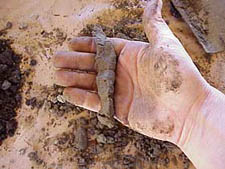
Create a "ribbon" with your soil to determine how much clay it contains.

Five Soil Tests

Here are five home tests you can conduct on your own to help you determine your soil texture, drainage, and pH.
Ribbon Test. Take a handful of moist soil and roll it in your hand to the size of a ping-pong ball. Squeeze the soil ball between your thumb and fingers in the palm of your hand to make a ribbon. Stand the ribbon straight up in the air. If you can't form a ribbon, then the soil is at least 50 percent sand and has very little clay. If the ribbon is less than 2 inches long before breaking, then your soil has roughly 25 percent clay in it. If it is 2 to 3-1/2 inches long, then it has about 40 percent clay. If the ribbon is greater than 3-1/2 inches long and doesn't break when held up in the air, then it is at least 50 percent clay.
Jar Test. Put 1 inch of dry, crushed garden soil in a tall quart jar. Fill the jar 2/3 with water and add 1 teaspoon of a dispersing agent such as Calgon or table salt. Shake the jar thoroughly and then let the contents settle. Sand will settle to the bottom in about one minute. Measure the depth of that layer. Silt will settle in 4 to 5 hours. You should see a color and size difference between the sand and silt layers. If not, measure the depth of both layers and subtract the sand depth from the total to determine the silt depth. The clay takes days to settle. Determine its depth in the same way as for the silt. Some of the smallest clay particles may remain permanently in suspension and will not settle out.
By measuring the depth of each layer of soil particles, you can figure the percentage of sand, silt, and clay in your soil. For example, if you have a 1/4-inch-deep layer of sand on the bottom and the overall depth of the soil in the jar is 1 inch, then your soil has about 25 percent sand in it.
Percolation Test. Dig holes 1 foot deep by 2 feet wide in various places in your garden or landscape. Cover the holes with plastic to let the soil dry out. Once it's dry, fill the hole to the top with water and time how long it takes for the water to completely drain. The ideal time should be between 10 and 30 minutes. If the water drains in less than 10 minutes, then your soil will tend to dry out quickly in summer. If it takes 30 minutes to 4 hours to drain, you can still grow most plants but will have to water slowly to avoid runoff and to allow the water to soak deeply. If your soil takes longer than four hours to drain, you may have a drainage problem.
One caveat: Extremely dry soils, especially those with large amounts of clay, tend to crack. The water in the drainage test will leave quickly because of these cracks, not because of good structure.
Compaction Test. The simplest way to see if your soil has a hardpan or compaction layer below the surface is to take a metal rod and walk around your property sticking it into the ground. If you can't easily push the rod into the soil at least 6 to 8 inches deep, then you need to improve the aeration of your soil. If you push it down and consistently meet resistance at a certain depth, then there may be a hardpan layer.
To further check for a compaction layer, dig a 1- to 2-foot-deep hole in the garden and look at the profile. A hardpan appears as a horizontal layer of soil that looks denser with less crumbly soil particles than the topsoil, has few roots or earthworms, and may even be a darker color than the rest of the soil.
Another way to tell if you have a hardpan layer is to dig up a plant and examine the roots. If they're white, vigorous, and well branched and extend at least 6 to 8 inches deep, then your soil has good structure. If the roots are 1 to 2 inches deep, mushy, and gray colored, they are infected with a bacterial rot. If they are shallow, brittle, and black, they're infected with a fungal rot. Both diseases are enhanced by poor drainage either from a high water table or a compaction layer.
pH Test. To check if your soil is severely alkaline, take 1 tablespoon of dried garden soil and add a few drops of vinegar. If the soil fizzes, then the pH is above 7.5. The free carbonates in the soil react with the acid at a pH of 7.5 and above.
To check for acidity in the soil, take 1 tablespoon of wet soil and add a pinch of baking soda. If the soil fizzes, then the soil is probably very acidic (pH less than 5.0). The ideal pH for most plants is 5.5 to 7.5. A few plants prefer more extreme conditions. Try this remedy for acidic or alkaline soil: If your pH is on the extreme end of either range, take a soil test to determine the exact pH. Add the appropriate amounts of limestone (for acidic soils) and sulfur (for alkaline soils), according to the soil test.  http://www.garden.org/ediblelandscaping/?page=soil-common-sense

Vegetable Garden Design


Raised beds help keep vegetable gardens neat while maximizing the planting space.
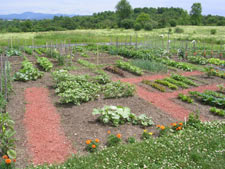

Plan your vegetable garden to have maximum space for vining vegetables, such as cucumbers, and clearly defined pathways.
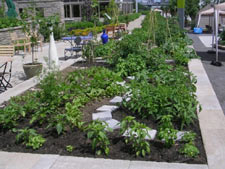

Place stepping stones in a large raised bed veggie garden so you don't compact the soil when working.
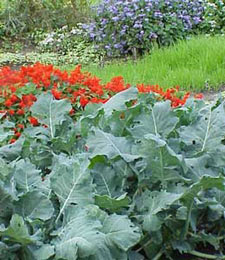

Mix and match colors and textures of flowers and vegetables to create a stunning visual effect.

Tepee trellises let tomatoes grow in their natural form, yet keep them upright, making more room for herbs and flowers to grow.
My first memories of vegetable gardening were following my Italian grandfather around his farm in Connecticut and helping him hill potatoes and tie up tomatoes. Probably the fondest remembrances were harvesting and eating the produce in July when the garden seemed to overflow with vegetables. Luckily these memories have overshadowed recollections of weeding on hot, humid summer days.
That was 40 years ago and I'm still vegetable gardening. However, I've learned a bit since then. Now I experiment with new varieties, plant combinations, and techniques to make my vegetable garden a productive, fun, and attractive part of my yard. Vegetable gardens can be as beautiful as any flower garden while also providing food for the table. All it takes is a little planning. While I tuck vegetables here and there in flowerbeds, I also like having a main vegetable garden area to concentrate the food production. The main vegetable garden doesn't have to be all veggies, though. Feel free to include herbs, edible flowers, and fruits.
While I make discoveries every season, I've settled on a vegetable garden layout using raised beds. For me, it's the key to a beautiful and productive garden. First, let's review the basics of vegetable gardening, then we'll talk about building raised beds.

Choose a Sunny Location

It's critical to choose a sunny spot for growing vegetables. Most fruiting vegetables need 6 to 8 hours of direct sun a day for best results. Leafy greens, such as spinach and lettuce, can thrive with a bit less direct sun. If you assess your yard in winter, remember that deciduous trees that are then leafless will cast shadows as the growing season progresses.
The best location for the vegetable garden is close to the kitchen so it's easy and convenient to visit. In addition, it helps if you can view the garden from a window. When the garden is easy to see and reach, you are more apt to notice what needs to be tended and to take full advantage of the harvest.
While the ideal garden location has loose soil that drains well, don't fret if your soil is less than ideal. You can improve it over time by adding organic matter, such as compost, or create raised beds on top of poor soil by bringing in the amount of topsoil and compost you need.

The Right Size Garden

A 20- by 20-foot garden will give you room to grow a wide range of crops, including some that need a lot of space, such as sweet corn and winter squash. A 10- by 12-foot plot is sufficient for a garden sampler with a variety of greens, herbs, a few tomatoes and peppers, beans, cucumbers, basil, parsley, and edible flowers such as nasturtiums. I always include flowers in my garden, even if they aren't edible, because they are beautiful to cut and bring indoors. Flowers also attract pollinating and beneficial insects to the garden. By growing plants in succession and using 3-foot-wide beds with 18-inch paths, you should have plenty of luscious vegetables for fresh eating and extras for sharing.
To design your garden from scratch, plot it on graph paper. Use paper with a grid of 1/4-inch squares, with each square representing 1 foot in the garden. Outline the beds in pencil, then fill in the plant names.

Preparing the Garden Space

Once you have a plan, you're ready to measure out the garden. You'll need a tape measure, plenty of string, 1-foot-long wooden stakes, and a hammer to drive the stakes into the ground.
For best sun exposure, orient the garden so the beds run east to west, with the tallest plants on the north end. This will reduce the chance of one vegetable shading another. Following your plan, drive a stake in each of the four corners of the garden.
At this point you'll need to remove any sod and rototill or turn the soil by hand to loosen the soil and remove weeds. If you're starting in the fall to get a garden ready for spring planting, you have an option that will save you some hard work. Mow the area close to the ground and lay three to four layers of black and white newspaper over the garden area. Cover the newspaper with a 4- to 6-inch-thick layer of straw, and cover that with a 1- to 2-inch-thick layer of compost. The newspaper/straw/compost combination will kill the grass and weeds and provide a great habitat for earthworms to work the soil. By spring the grass will be dead and decomposing and you can work the soil.
Before you plant, have the soil tested to determine the soil pH and nutrient levels. Most vegetables require a pH between 6.0 and 6.8. Add limestone to raise the pH in high-rainfall areas; add sulfur to lower the pH in the arid West. Your state university's cooperative extension service or local garden center will have information on obtaining a soil test kit.

Lay Out the Beds

Now it's time to lay it all out. Measure, stake, and outline each bed with string. To make a raised a bed, first loosen the soil using a shovel or a garden fork, then shovel soil from an adjacent path onto the bed.
Keep adding soil until the bed is about 8 to 10 inches tall. Smooth the soil on the surface of the bed by raking it flat with an iron rake. Draw the soil evenly between the string boundaries, letting excess soil fall off the edge of the bed outside the string. The object is to end up with a flat-topped raised bed that extends fully to the string boundaries about 8 inches above the pathway. Raised beds can be any shape you want as long as they aren't wider than 3 feet. The center of a bed is hard to reach if it's any wider than that.

Feed the Soil

It's easier to address the soil's long-term nutrient needs before planting rather than after veggies are already growing. I build up the soil with natural fertilizers and compost. It may take time to build fertile, rich soil using organic fertilizer and amendments, but the nutrients from organic products are released into the soil slowly, providing weeks of nutrition to the plants. Once each bed is formed, add a 1- to 2-inch-thick layer of compost over the surface and work it into the soil with your rake. Use supplemental organic fertilizers to correct nutrient problems discovered in the soil test and to side-dress vegetables during the growing season. These fertilizers can be in granular or liquid form.

What to Eat?

Now comes the fun part -- deciding what to grow. The simplest, and seemingly most obvious, way to decide what to grow is to think about what vegetables you like to eat. Even though beans are one of the easiest vegetables to grow, if you hate beans, don't grow them! That being said, if you love peanuts and live in Minnesota, you may want to pass on trying to grow this heat-loving crop. Beans, squash, tomatoes, lettuce, and greens such as Swiss chard and arugula, are probably the easiest vegetables to grow. Once you decide on your favorite veggies, then you need to know how to plant them.
Many vegetables are best started from seeds sown directly in the ground (direct-sown); others go in as seedlings. You can grow your own seedlings indoors or buy them. In early spring, a week or two before the last frost, direct sow crops that grow best in cool weather, such as beets, carrots, parsnips, peas, radishes, spinach, Swiss chard, and turnips, as well as the many delectable exotic greens such as arugula, Asian mustards, and mesclun mix. These greens grow particularly fast from seed. After the last frost, direct-sow warm-weather vegetables, such as beans, cucumbers, corn, and squash. Among herbs, dill, basil, and cilantro are sure bets from direct-sown seed.

Transplants

Some vegetables need to be planted outside as transplants because they take so long to mature. Others just grow better from seedlings versus seed sown in the ground. Broccoli, Brussels sprouts, cabbage, and cauliflower can be started either way but setting transplants outside usually works best. Eggplants, leeks, peppers, and tomatoes need to be started from transplants because they need such a long growing season.

Right Time to Plant

The average date of frost in spring is the key date to use in garden planning. If you don't know the date for your region, check with your local cooperative extension service or garden center.
You can safely plant the cool-season vegetables, such as broccoli, Brussels sprouts, cabbage, celery, parsley, peas, radishes, and spinach, a few weeks before the last frost date. In mild-winter climates, these crops are usually planted in fall for a winter garden. Arugula, beets, leaf lettuce, parsnips, potatoes, and Swiss chard are a bit less frost-hardy but still grow well in cool weather. Plant warm-season vegetables, such as green beans, corn, cucumbers, eggplant, melons, peppers, summer squash, and tomatoes only after the threat of frost has passed.

Special Tips and Techniques

There are special tips and techniques that can make your veggie garden more efficient and productive. One of my favorites is succession planting. A good example of succession planting is growing a warm-season crop such as beans in the same spot where you just harvested a cool-season crop such as spinach. In most areas the spinach is finished early enough in the season to allow you to plant a mid-season crop of green beans that will mature before frost.
Interplanting is another way to maximize your planting space. Plant quick-maturing crops, such as lettuce, around slow growers, such as broccoli. The lettuce will be harvested by the time the broccoli needs the space.
When growing more than one of any type of vegetable -- tomatoes, for instance -- plant several different varieties. This increases the chance of success, since some varieties will perform and taste better than others. It also extends the harvest season if you plant early, mid- and late-season varieties.

The Miracle of Raised Beds

In general, raised beds are the best way to grow the most vegetables with the least amount of work. That's my kind of gardening. The only times I'd recommend not using raised beds is if you have sandy soil, live in a very dry area, and are growing crops that need hilling and mounding, such as potatoes. Otherwise, raise the soil!

The Benefits of Raised Beds

  • They warm up and dry out faster in spring, so plants get a jump on the season.
  • You can grow more vegetables in less space and have less area devoted to paths.
  • They create attractive, well-organized planting areas.
  • They save on the amount of fertilizer and compost used because it's concentrated just on the planting beds.
  • It's less work, especially if you make permanent raised beds bordered with wood, bricks, or stone. You won't have to remake the beds each spring.
  • The plants will have healthy root systems because you won't be stepping on the planting bed, compacting the soil, and making it hard for roots to grow.
  • You can be more creative with design, making round raised beds for example, and planting vegetables, herbs, and flowers in various designs on the raised beds.
  • It's easy to plant climbers such as cucumbers up an A-frame trellis because it fits nicely over a 3-foot bed.
  • It's easy to fit season extenders such as row covers with wire hoops over the 3-foot beds.
  • Most important of all, raised beds are beautiful!  http://www.garden.org/ediblelandscaping/?page=veg-garden-design 

Planning Your Landscaping 101


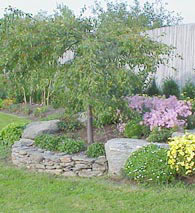
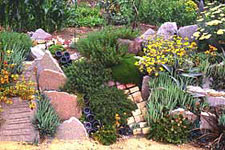
Consider making curved, raised beds in your landscape out of natural materials, such as stone, to create additional visual interest.


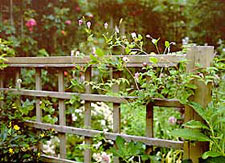
Fences offer places for plants to grow and a way to distinguish one area of the garden from another.


Don't forget simple natural elements, such as rocks in the garden. They help break up a planting bed and can double as stepping stones.


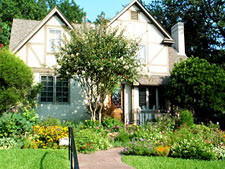
Don't be afraid to grow your edible flowers, shrubs and trees in the front yard where everyone can appreciate them.


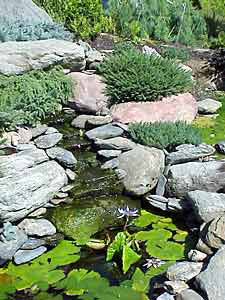
Simple water gardens provide habitat for frogs, dragonflies and exotic plants.To keep mosquitoes away, place mosquito dunks in the pond or raise fish.
While an edible landscape is a special type of landscape due to the emphasis on fruits, vegetables, and herbs, the process of creating a landscape plan is the same as with purely ornamental features. There are more new homeowners in the country than ever before. Many, when faced with landscaping a new yard, feel overwhelmed. You can do the design and installation yourself or work with a professional landscape designer. Either way, it helps to do some creative thinking beforehand, even if you intend on hiring a designer eventually. The more specific you can be with your likes and dislikes, and the more concrete you can be in describing your landscape dreams and desires, the more likely you'll be happy with the results.
Since we're talking about edible trees, shrubs, and flowers, you might want to find a few different people to help you, such as one who is a specialist in edible crops and another who is a more traditional designer who can put the plan all together. But first let's start with exploring your dreams.

Your Landscaping Scrapbook

In an effort to be as specific as possible, the first step into your new landscape is a purely imaginary one -- a scrapbook filled with images that appeal to you. These could be images not just of plants and gardens but of structures, walkways, walls, fences, ornaments, and other landscape features. Here are the supplies you'll need to assemble: a binder, approximately 200 sheets of binder paper, scissors, several sharp pencils with good erasers, tape, ruler, and a few sheets of standard graph paper.
With these materials plus an armful of home and garden magazines, your job is to create your own personal garden design scrapbook. The scrapbook will be invaluable on trips to the nursery, hardware store, or lumberyard, and it will help you avoid disappointments when you deal with contractors, carpenters, bricklayers, concrete masons, and landscapers.
If you take the time to create a binder filled with the specifics of what you like in a garden, you'll go a long way toward answering questions decisively. Instead of waving your hands in the air and hoping for the best, your landscaping binder will allow you to point to the exact thing you want: "I want this type of walkway with this type of crushed stone."
Each time you see something appealing in a photograph or illustration, cut the picture out of the magazine and tape it to a piece of binder paper. Be sure to make notations on the paper as to what it is, specifically, that you like. Three months later, in an entirely different frame of mind, you may find yourself wondering what it was in the photograph that caught your eye.

Three-Dimensional Thinking

Once you've collected your ideas, it's time to make use of that graph paper, but heed this warning: While virtually every book ever written on the subject of home landscaping stresses the importance of committing a plan to paper, the precise nature of the process presents some hazards to creativity. Yes, it is important for you to know the dimensions of the lot, which direction the prevailing winds blow, what the exposure of the yard is (morning or afternoon sun or shade), the location of water spigots, electrical outlets, etc. But there's something about putting these facts down on paper that makes it possible to design the life and spirit right out of the project.
If you think you may be subject to the tyranny of graph paper, neutralize its effect by starting the composition of the plan outdoors. To do this, take your landscaping scrapbook to the yard, along with a few dozen 12-inch wooden stakes, a half dozen 6-foot, 2- by 2-inch wooden stakes (available at any lumberyard), a spool of heavy cotton string or twine (500 feet should do), a couple of long garden hoses, two handfuls of clothespins, and a few old bed sheets. An odd list of equipment, to be sure, but useful.
Put your equipment aside for a moment, and take a good look at your scrapbook. What have you got? You may have some ideas for fences, a play area for the kids, a deck or patio, perhaps an arbor, some fruit trees, an outside eating and cooking area, a vegetable garden, an expanse of grass laid out with lawn games in mind, or even a water garden. Your challenge is to arrange the elements you want in the space available. To successfully meet this challenge, you should know every corner of your yard intimately. You may think you know it already, but you'd be surprised at how many people are locked into only one viewing position, usually about 6 feet away from the back door!

Getting to Know Your Yard

Get acquainted with your yard by walking its perimeter all the way to the edges of the property. While you walk, keep looking back at your house. Is there a spot, somewhere toward the rear or to the side of the yard, where the view of your house is particularly pleasant? Would this be the best place for a small, freestanding deck or patio, just right for a couple of chairs? Or is there a spot beneath a group of mature trees at the back of the yard that you discover to be delightfully shady?
The next step is putting mock-ups of the various elements into position using the stakes, string, and sheets. Any rectilinear feature, such as a deck, patio, or sandbox, can be outlined using the stakes and string. Simply pound the stakes a few inches into the ground, and tie the string around the stakes to show the outline. Curved areas, such as planting beds, are easily outlined using a long garden hose (or several hoses connected together). Adjust the curves in the hose until the shape is pleasing from all angles, including from the window inside the house where it will most often be viewed.
To a person with little or no involvement in your landscaping design process, this mocked-up backyard may appear a motley mess. Where someone else sees only a sheet hanging from a line, you see a brick and latticework fence. That garden hose lying in a curve on the ground isn't just lying there, it's marking the boundaries of a lush vegetable bed. The best part of this exercise is the three-dimensional quality it gives your emerging plan, something almost impossible to achieve with only pencil and paper, which happens to be the next step.

Committing the Plan to Paper

Leave the stakes, sheets, and hoses in place for a couple of days, or weeks, if necessary. See how the arrangement looks at different times of the day and in different weather conditions. Once you're comfortable with the layout, get out the tape measure, pencils, and paper.
Here are the steps to putting your landscape plan on paper:
  • Draw a rough map. On a large notepad, sketch out your yard, including buildings, large trees and shrubs, property lines, fences, utility lines, paved areas, patios, pools, and other permanent features. Don't worry about accuracy yet. Using a compass, find the direction of north and mark it on the map.
  • Measure permanent objects. Measure the features, such as house and pool dimensions, tree and shrub drip lines (the circle on the ground made by water dripping off the plant's outermost leaves is called the drip line), and lengths of fences. Add the measurements to the rough map. Also measure and locate windows and doors, as well as outside faucets, lights, and electrical receptacles.
  • Establish accurate locations. Using stakes and string, mark a straight line along a property boundary, starting at one corner. Keeping the tape measure at a 90-degree angle from the boundary, measure the distance from the boundary to the nearest corners of the house, trees, and other objects on your map. Measure from other boundaries, too, to confirm accuracy.
  • Include wish list items. Measure the outlines of your intended deck, patio, play area, shade trees, vegetable garden, herb garden, flower beds, or whatever it is you're considering. To correctly position everything on the plan, you'll need to measure in from the lot line, just as you did with your house.
  • Transfer measurements to graph paper. With a ruler and pencil, transfer your measurements accurately to graph paper. Use 1 inch to represent 4 feet for small yards, 1 inch to 20 feet for larger sites.
  • Make tracing paper overlays. Tape the base map to a table or board. Lay sheets of tracing paper over it and make additional maps, each with a different theme, such as sun and shade patterns, slopes, views, gardens, and traffic patterns. Each map becomes a layer that adds detail to the base map but remains separate for clarity.
By the time you have the finished plan on paper, you should be confident that you have a design based in reality, rather than an abstract, two-dimensional drawing pulled together on your kitchen table. This, combined with your garden scrapbook, will hold you in good stead as you go about turning your plans and dreams into reality.

It All Comes to Life

Now's the time for you to face another kind of reality: the fiscal kind. Putting cost estimates together can be a very time-consuming job, and you may decide to leave it to a professional. This, of course, depends on whether you intend to do the work yourself or hire someone else to do it for you. Although this is largely a personal decision, it should be pointed out that most yard construction (with the exception of pools, fountains, and sophisticated electrical work) is well within the ability of a person with average mechanical aptitude. If you enjoy these kinds of projects, by all means, have at it; you'll save considerable labor charges and experience a great deal of pride once the landscaping project is completed.
If, however, you decide you have neither the time nor the inclination to do the landscaping yourself, a variety of professionals and semiprofessionals are available. The type of help you choose depends both on the complexity of your plans and on any personal contacts you have in the field. You may be better off using someone with whom you have a relationship that goes beyond a mere contract.
Once the construction of your landscape actually begins, an odd thing happens. As soon as the first section of fence is hammered into place, or your future herb garden starts to fill in with the delicate sprouts of your favorite edibles, your imagination takes over and completes the project in your mind's eye. That's why ground-breaking ceremonies attract so much attention. A landscaping project that you may have discussed for years is finally on the way to becoming reality.
See also: Vegetable Garden Design    http://www.garden.org/ediblelandscaping/?page=planning101

Growing Berry Shrubs


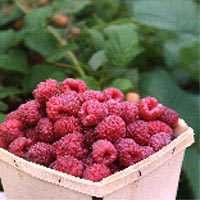
Red raspberries produce a main crop in midsummer, while some varieties such as 'Heritage' produce a second crop in fall.


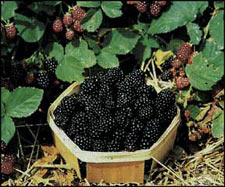
Blackberries make the perfect edible hedge, keeping unwanted visitors out of your yard while yielding quarts of rich, flavorful berries.


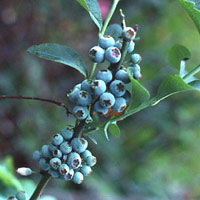
Not only will blueberries produce an abundance of fruits in late summer, the foliage turns a brilliant red in autumn, adding to the fall foliage show.


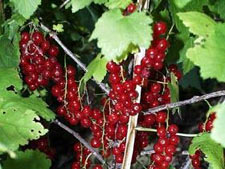
Red currants make an attractive shrub while producing juicy, tart fruits that are great for jams, jellies, and juice.
When you think about growing berries, strawberries are likely the first fruit that comes to mind. While these luscious berries are a favorite addition to an edible landscape, there are other berry-producing plants that not only yield an abundance of fruit, they also make attractive landscape plants. A gooseberry bush will fill the fruiting gap between the last strawberries and the first red raspberries, and will still be ripening fruit when the raspberries have finished. Midsummer brings on the red and white currants and blackcap raspberries. After that come the blackberries and then blueberries, and finally the everbearing red raspberries, which ripen until frost.
Also, many of these berries make excellent shrubs and hedges. Grow blueberries, currants, and gooseberry bushes as foundation plantings along your house or as an informal hedge in the backyard. Grow thorny brambles, such as blackberries and red raspberries, along a fence or wall or as a hedge to keep cats, dogs, and wildlife out of your yard. The fruits on these bushes are attractive even if you don't like the flavor. Birds and other wildlife will enjoy any you forget to harvest. Also, the foliage of some berry shrubs, such as blueberries, turn a brilliant color in the fall.

Why Berries?

Compared with apples, peaches, or any of the tree fruits, bush and bramble fruits are easy to grow. They rarely require spraying for pests, and they begin bearing some fruit the year after planting. By their third season they should be in full production. Perhaps most important, they're very space efficient. None require a mix of varieties for cross-pollination.

Berry Basics

With the right culture, berries will reward you handsomely. First, aim for a mix of different types to extend the harvest season, then plant small numbers of each kind and care for them well. Buy the smallest number of plants you can as you're learning.
Incorporate lots of organic matter before planting, and mulch with shredded leaves or compost every year. Prune regularly through the season to keep each branch or cane as productive as possible. Here are some specifics on growing these delicious, attractive fruits.

Gooseberries

Gooseberries grow on dense bushes that reach 2 to 4 feet tall without training. They're hardy throughout most of the United States except in the southwestern deserts and the inland valleys of California. Best fruit production occurs in the mid-Atlantic and northeastern U.S.
Gooseberries leaf out early in spring. The foliage is a lustrous green, turning bronze to red in fall. Branches are covered with straight, 1-inch-long spines. The ripe fruit is either translucent yellow-green or dusky purple to red, depending on the variety. When ripe, the fruit is juicy and sweet with a pleasing acidity. As with any fruit, there are marked varietal differences in flavor.
Gooseberries are one of the few fruits that hold their quality well on the bush when ripe. The earliest gooseberries (which can be picked green) fill the brief gap between the last strawberries and the first red raspberries. When the berries reach about 1/2 inch in diameter and are still hard and a month from being ripe, they're excellent for pies and other cooked desserts. This early harvest thins the fruit so the ripe berries will be larger.
Gooseberries, especially the unripe fruit, are high in pectin; you can make very thick jam with no added pectin. A mature plant can produce from 5 to 8 quarts of fruit, so one plant may be all you need. Where space is extremely limited, train gooseberries against walls as fan-shaped or horizontal espaliers. These espaliers provide year-round interest, and picking will be easier, too.
Gooseberries bear fruit near the base of 1-year-old shoots and on short spurs on older wood. So no matter how carelessly one prunes, there's always some fruit. Remove about 20 percent of the oldest growth — wood that's been growing for three to five seasons — each year. Also cut out enough of the newest growth to make the plant open and easy to pick. Always save some vigorous new shoots to become future main branches. Any new shoot can be cut back to 4 to 6 inches with little loss in fruiting potential.

Red Raspberries

A 30-foot row of raspberries, trained to single stems against a wall or fence, will yield about a quart of fruit every other day for three weeks, and that's plenty of raspberries for most people. A more traditional hedge-type planting will yield twice that amount, although it takes at least twice the space. Intensively trained berries are extremely productive. To get the most from red raspberries, plant at least two kinds: a main crop variety for heavy early summer harvests, and a fall (or everbearing) type to close out the berry harvest. Where the season is long, you may need to plant two fall varieties to keep you picking until frost.
The popular 'Heritage' variety, for example, will be finished in early September in USDA Zone 6, with about four weeks of potential ripening weather left. It's a mistake to cut raspberry canes back in an effort to make the canes self-supporting. The most fruitful buds are those nearest the top of the canes. You'll get the best results by tying the canes to two wires at 2-1/2 and 5 or 6 feet off the ground, depending on the vigor of the variety. Main-crop raspberries fruit on 1-year-old canes. After harvest, cut them out at ground level to favor the new canes. When you've got vigorous new canes growing about 6 inches apart, remove any new ones that appear through the growing season.
Fall raspberries fruit on new canes at the end of their first growing season and again the following summer. For heavier fall crops, prune the canes to the ground after the first harvest in autumn and forego the summer crop from fall varieties.

Black Raspberries

Although closely related to the reds, blackcaps have a distinctive flavor, ripen a little later, and require slightly different training. Black raspberries spread by bending the tips of their canes to the ground where they root, leapfrogging along at 2 to 3 feet a year. New shoots arise only from the original crowns, not willy-nilly from the roots as with red raspberries. Also, there are no fall-fruiting black raspberries. In most other respects, they're very similar to the reds. In an attempt to bend to the ground and root, the canes elongate and become thin and weak at the tips. Unless you want to start new plants, cut these canes back to 3 or 4 feet. They'll be self-supporting, with no loss of fruiting potential. Cut the old canes out after harvest. Since black raspberries don't throw root suckers, they take much less thinning than reds.

Currants: Black, White, and Red

Judging by flavor alone, most people would regard currants as two totally different fruits: the fresh, tart reds and whites versus the strangely pungent and heavy blacks. But they're close botanical relatives, and because they ripen about the same time and their culture is almost identical, it's best to consider them together.
Red currants are one of the most beautiful fruits. When the berries are ripe, the plant literally drips with long clusters of gleaming scarlet beads. Each red berry (white currants are just a different color variation) has a transparent skin, so sunlight makes it glow from within. Currants are very juicy and quite tart. When fully ripe, you can enjoy them right off the bush, the way you would eat any other berry. Traditionally, currants are used for jelly, jam, and cooked desserts. Ripe currants will hold on the bush for much longer than most other fruits without dropping or losing quality.
Black currant bushes are slightly larger than red currants, and the fruits are not as conspicuous. Black currants are meatier, less juicy, and when eaten fresh they're definitely an acquired taste. Cooked, however, they lose their musky overtones and make one of the finest-flavored jams of all.

Blackberries

Blackberry culture began in North America, although there are flavorful species native to Europe and Asia. Today's improved varieties have mixed heritage, part American natives and part Eurasian species. Blackberries are far and away the heaviest bearing of the bramble fruits, producing about twice as much as red raspberries. They ripen in midsummer after the raspberries are finished, and are more heat tolerant than raspberries.
Blackberries are robust plants that need to be restrained or they can become weeds. They grow and can be trained much like red raspberries. However, since they throw root suckers so vigorously, you may want to confine their roots with metal or fiberglass barriers sunk 1 foot or more below ground level.
Blackberries are much more thorny than reds or blackcaps. Where space is restricted, or if you don't have the patience to pick fruit from these prickly plants, choose one of the relatively new thornless varieties, such as 'Chester'. Many of these are trailing in habit, so you'll need to rig a wire trellis to train them up. There are also new blackberry varieties that fruit on the first year canes similar to everbearing red raspberries. 'Prime Jim' and 'Prime Jan' produce in late summer the first year and can be mowed down each fall for easy maintenance.

Blueberries

Blueberries are a relatively new fruit, domesticated only within the last 75 years. They probably would have been tamed sooner if people had understood their need for an acid soil. Brought from American wild lands into gardens, the fruits almost always died because the soil had been limed. Blueberries demand a soil pH between 4.0 and 5.5. Correct the pH for blueberries with peat moss (mixed at least 50/50 with your native soil) and perhaps some soil sulfur. The bushes have extremely shallow root systems, so the heavy peat blend need not be deeper than 12 inches. Blueberries need a steady supply of moisture; the water-retentive peat will help with that as well.
One blueberry bush is all you need. In its fourth season it will produce a pint or so of fruit. At maturity, when it's 4 to 6 feet tall, the right variety can produce up to 20 pints over two to three weeks. However, if you've room for three or four varieties, you can stretch the harvest to 8 to 10 weeks, into the fall raspberry season. Although cross-pollination isn't essential, it will encourage larger fruit.
Blueberries are extremely handsome shrubs, notable for their brilliant fall color and bright stems in winter. Some of the newer varieties are low and shrubby. These half-high varieties, such as 'Northland', make excellent shrubs to work into a perennial border or a low-growing flower bed. For gardeners in warmer climates, try growing Southern blueberry varieties, such as 'Misty', or rabbiteye blueberries, such as Tifblue'. These are more adapted to the summer heat.
When planting in the landscape, keep blueberry bushes away from masonry walls and foundations, where the soil can be excessively alkaline. If you mix them into a shrub border or with other plants, be sure to amend the soil pH so they can thrive. Other than netting to keep birds away, they are carefree fruits that will give you years of production.    http://www.garden.org/ediblelandscaping/?page=berry-shrubs

Herb Gardening Basics 101


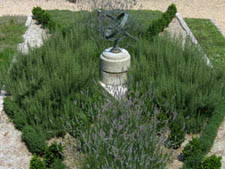
A formal English knot garden features standard herbs such as rosemary, oregano and thyme with a focal point, such as a sculpture, in the center.
According to the 2006 National Gardening Survey, more than 14 million households in the United States grow herbs -- in vegetable and perennial gardens, in containers, or on windowsills. And with good reason! In addition to their obvious role in cooking, herbs are also attractive and add color, interesting textures and forms, and rich or subtle fragrances to the home and garden.

Uses for Herbs

The most popular use for herbs is in cooking, and nearly every recipe can be enhanced with the addition of appropriate herbs. Can you imagine tomato sauce without oregano? Thanksgiving stuffing without sage? Some dishes are defined by the herbs they contain -- pesto without basil just isn't pesto!
Herbs have many other uses as well. Many types make wonderful teas, either individually or combined in blends. Chamomile makes a soothing tea for unwinding after a hard day. Bee balm (Monarda) makes a tangy tea with citrus overtones. And in addition to being tasty, mint teas aid in digestion.
Many herbs are also believed to have medicinal properties. The echinacea that has become popular as a cold remedy is extracted from the purple coneflower, a common garden perennial.
Of course many gardeners grow herbs simply because they are attractive and durable plants. Bee balm not only makes a tasty tea, it is also a reliable perennial with lovely red, pink, or white flowers. And chamomile's daisy-like blooms brighten up any sunny border.

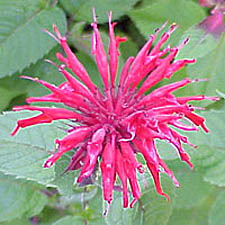
Bee balm (Monarda) is an attractive herb that butterflies and hummingbirds love as well. The flowers and leaves make an excellent tea.

Where to Plant

Plant herbs where you can get to them easily for frequent harvesting, especially if you plan to use them in cooking. Consider planting a special kitchen garden near the house, so you can readily harvest herbs, greens, and other frequently used crops. You can also grow herbs in containers or even window boxes.
Most herbs prefer full sun -- at least 6 hours per day. Herbs that will tolerate some light shade include chives, cilantro, dill, and mint. Remember that if you plant perennial herbs in the vegetable garden, keep them in a separate section so you'll be sure to avoid them during spring and fall tilling.

Types of Herbs

Like all garden plants, herbs can be categorized as annual, perennial, or biennial. Annual plants grow for only one season and so must be planted each spring. Perennials live for several years. Their foliage dies back in the fall, but the roots overwinter and resume growth the following spring. And biennials grow for two years, growing foliage the first season, overwintering, then forming seeds and dying back at the end of the second season.
Here are some examples of each type of herb.

Annual Herbs


  • basil
  • chamomile
  • cilantro/coriander
  • cumin
  • dill
  • fennel

Perennial Herbs*


  • catnip
  • chives
  • lavender
  • lemon balm
  • lovage
  • lemongrass
  • marjoram
  • mint
  • oregano
  • rosemary
  • sage
  • tarragon
  • thyme
*These may not be hardy in all regions of the country. Check zone ratings.
Parsley is one of the few common herbs that is a biennial. However, unless you want to harvest the seed, you can treat it like an annual and plant new plants each season.

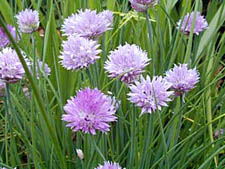
Chives not only produce mild, onion-flavored leaves, the flowers are beautiful and edible as well.

Herb Garden Design

Herbs can be grown with other plantings or in their own garden. You can create a traditional, formal herb garden with two paths intersecting at the center to create four symmetrical gardens. Each section can feature herbs grouped by theme, such as culinary herbs, medicinal herbs, and aromatic herbs. Try to grow herbs with similar growing requirements together for easier maintenance. You can decorate the center intersection with a pot or urn filled with attractive herbs. The paths can be edged with landscape edging, bricks, stone, or even well- trimmed, woody herbs such as lavender.
Even though a formal herb garden is attractive, most gardeners would rather mix herbs in with other flower or vegetable plantings or grow them in containers. When growing herbs with other plantings, be sure they have enough room to expand and won't get shaded by tall plants.
Herbs make great container plants. To grow herbs successfully in containers or window boxes, you'll need a pot that has adequate drainage holes. Use fresh potting soil each year and keep the container well watered and fertilized. Try different combinations such as purple-leaved basils mixed with creeping thyme, or silver-leafed sage planted with curled-leafed parsley. Large perennial herbs, such as rosemary and lavender, can have their own pot and be over wintered indoors in cold climates. You'll be amazed at how attractive and useful these potted herbs can be.

Soil Requirements

In general, herbs prefer a moderately rich soil. An overly rich soil (or excessive fertilizing) can lead to vigorous growth. However, many people find that the flavor of overfertilized herbs is bland, probably due to reduced essential oil content.
Many culinary herbs, such as thyme and oregano, are of Mediterranean heritage and are accustomed to growing in gravely soils. The soil in your herb garden should have excellent drainage. If yours doesn't, consider growing your herbs in raised beds or containers.

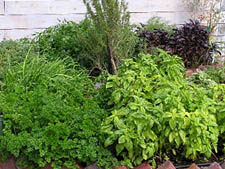
Culinary herbs with different leaf textures and colors are best grown close to the house where they can be easily harvested and enjoyed for their beauty.

Caring for Herb Plants

Most herbs will thrive with about 1 inch of water a week, similar to other vegetable plants. Herbs in raised beds and containers will dry out more quickly than those planted directly in the garden and may need more frequent watering. Keep garden beds weeded, especially early in the season as plants are getting established. If you have fertile soil, you won't need to add much fertilizer to herbs grown in the garden. For those in containers, you'll need to add a dilute, complete fertilizer such as 10-10-10 to keep the leaves green and plants growing strong.
Once established, most herb plants are remarkably resistant to insect and disease attack. The oils that give them their aroma and flavor likely evolve to repel pests. However, keep an eye out for insects such as aphids, and diseases such as powdery mildew.

Harvesting Herbs

Harvest herbs by cutting back a shoot to just above a leaf. This will both provide you with a harvest and encourage nice, bushy growth on the remaining plant. In general, an herb's flavor is most pronounced when it is harvested just before the plant begins to flower and in the morning when the essential oils are most concentrated.

Tips


  • Heavily harvested herb plants can look untidy. Consider interplanting herb beds with annual flowers to camouflage the trimmed plants.
  • Herbs can provide important habitat for beneficial insects. Dill and fennel are two herbs beneficial insects particularly like.
  • Perennial mints, including spearmint, applemint, and peppermint, are very vigorous and can become invasive. Rather than planting them directly in the garden, grow the plants in containers, then sink the containers into the garden. This will contain the roots and limit spreading.
  • Perennial herbs that are not hardy in your region can be overwintered indoors, then brought back outdoors in the spring. For example, in USDA Zones 7 and colder, bring rosemary and lavender plants indoors in late fall. Maintain them in a cool, bright spot over the winter, and move them outdoors again in the spring. In USDA Zones 8 and warmer, rosemary and lavender can be left outdoors year-round.

Other Great Herb Stories

Herbs in a Pot
Overwintering Herbs
Herbes de Provence
Herbal Tea Recipe   http://www.garden.org/ediblelandscaping/?page=herb-gardening

Charlie says… Eat Orange Tomatoes for Lycopene


'Tangerine' orange tomato has higher levels of the anti-oxidant lycopene than red tomatoes.
We've all seen the studies saying red tomatoes contain high amounts of the anti-oxidant lycopene. Lycopene has been shown to protect cells and essential fatty acids from breaking down in the body and contributes to better health. While tomatoes, specifically processed red tomatoes, were originally thought to contain the highest amounts of lycopene, researchers at the USDA's Agricultural Research Service in Davis, California have now found that orange is a good color for health, too.
Researchers asked 21 men and women not to eat any tomato products for a one month period. They then fed the participants chili made either with a common red tomato variety or with 'Tangerine' orange tomatoes for one week and then tested their blood afterward. They found those who ate the chili made with 'Tangerine' orange tomatoes had higher lycopene levels in their blood. They concluded that 'Tangerine' is a better source of lycopene than red tomatoes. It seems the lycopene in the orange colored fruits is better absorbed in the body.
So mix up your colored tomatoes this summer in the garden, growing some orange ones like 'Tangerine' to keep your body at optimum health.  http://www.garden.org/ediblelandscaping/?page=201104-charlie-says

Connecticut Kitchen Garden

With patience, hard work — and an impressive master plan — Pamela Page transformed a rocky lot in Bethel, Connecticut, into a gorgeously abundant organic kitchen garden.

Pamela in the Garden
Pamela Page's expansive, 90- by 55-foot fenced-in plot initially overwhelmed her. "But it's amazing how fast I filled in every square inch of dirt," she says. "Within two years, I was already dreaming of what I could grow if only I had more space."
 
Early Gardening Roots
As an undergraduate, Page spent several semesters in France; she fell in love with the luscious produce that Provençal villagers raised in tidy potagers and the wild greens they gathered in meadows. Her husband Igor Jozsa, an inventive cook, learned to revere seasonal ingredients during his boyhood in Italy.

Nasturtiums and Flowering Kale
In their early years together, the couple scoured Manhattan specialty shops for vegetables and fruits to serve at dinner parties, yet even the fanciest groceries underwhelmed their nostalgic palates. "Short of moving back to Europe permanently," Page asked, "how could we get just-picked Tuscan kale or an exquisite Charentais melon?" The answer: Grow their own.
 
Pear Trees
The couple, who co-own an architectural firm, call their eight and a half acres Ho Hum Hollow, but thumb-twiddling isn't on the agenda. Besides building a new house, Page and Jozsa hacked through poison ivy, pried up basketball-size stones from the earth, and hauled manure to "bring back the land."
 
Garden Work
Exuberant hosts, Page and Jozsa entertain every weekend. When visitors bemoan the toil a kitchen garden must demand, Page nods silently. It's a charade, she admits: "I try to look very tired and don't let on that when I garden, I'm hardly working. I listen to bees, sniff the mock oranges, stretch, and look. I'm learning, playing, having the time of my life. Gardening is one-third science, one-third art, one-third Peace Corps."

Edible Flowers
She still orders seeds in winter and starts them indoors in February, because it's the only way to cultivate rare or heirloom varieties that local places don't stock. "If you buy run-of-the-mill transplants, you're limited, and the point of this garden is that it's limitless. I've grown three-dozen different tomatoes, a dozen pepper varieties, a half-dozen types of cucumber, okra, and beans — in a single season." Not to mention edible flowers (and inedible iris, peonies, and dahlias that tempt the eye).

Baroque Salad
"The head gardener for King William III of England insisted that a 'sallet' contain no fewer than 35 ingredients," says Page. "So far, I only have 27!"

See the ingredients for Page's Baroque salad.


Trellis
"There's no need to buy expensive trellises," says Page, who dreamed up this DIY version, made from rot-resistant­ cedar, for her tomatoes.
 
Fence
To deter pesky groundhogs and rabbits, Page fortified the perimeter of her post-and-rail fence by digging a trench and installing chicken wire about three feet below the surface along the edge.
 
Entertaining in the Garden
At dusk, while Jozsa is prepping dinner, Page invites guests to harvest greens for a salad or raspberries for dessert. "It makes everything worthwhile to see the excitement on visitors' faces when they come back with full baskets. They're like kids."
  From Country Living Magazine