Showing posts with label Edible Italian Garden. Show all posts

Saturday, April 30, 2011

The Best Tomatoes for Sauce: San Marzano Tomatoes


Ask any chef and they’ll tell you that San Marzanos are the best tomatoes for sauce.
The flesh of San Marzanos is thicker and meatier than other sauce tomatoes, they have fewer seeds, a bolder flavor, and they’re less acidic. The end result? These tomatoes just melt into sauces.
To prep San Marzanos for sauce, you first have to remove the skin. Fill a large pot with water and bring to a boil. Drop in a few San Marzanos (you may have to work in batches) and boil until they’re skins start to blister (about 1-3 minutes). Remove the tomatoes from the water using tongs, a slotted spoon, or a Chinese skimmer and immerse them in a bowl of ice water. Once the tomatoes are cool enough to handle, use your hands to peel off the skins.
Next, chop off the tops of the tomatoes and slice away any tough flesh, bruises, or rot spots. To remove the seeds, cut the tomato in half lengthwise and gently scrape out the seeds using a small spoon or your finger. At this point, the tomatoes are ready to be frozen or canned.
Removing the skins and seeds from San Marzanos makes for an extra velvety sauce. Try using San Marzanos in this simple Garlic Tomato Sauce for pasta or pizza. They’re also perfect in ratatouille.
Look for fresh San Marzano tomatoes at your local farmers market. You can also find canned San Marzanos in specialty stores or larger grocery chains. http://eatdrinkbetter.com/2010/08/10/san-marzano-tomatoes-the-best-sauce-tomato/

Monday, April 18, 2011

THE ITALIAN GARDEN by JONATHAN RADFORD

THE ITALIAN GARDEN by JONATHAN RADFORD
Vegetable gardens in Italian gardens

The vegetable garden often conjures images of scruffy areas of wasteland under freeway bridges or near railway tracks, or maybe an area of a garden that nobody else really wants- a sort of "No-mans' land" between garden and rubbish-tip. Well, here in Italy the vegetable garden has a far more important and social role in the community. Italian wives need vegetables, lots of vegetables to create wonderful dishes straight from the garden, whereas Italian men need space, lots of space from their rather intense, Catholic wives. This combination of social comets, both flying in totally different directions, coupled together with a few Wars, Papal rules and a social revolution here and there means that Italians now ... GROW THEIR OWN- and really rather well!!
As a garden designer I have to study social requirements, coupled with social changes, with regards to horticulture and provide a service that's as 'in tune' with its environment as with its place in time. I believe that the need for organic vegetables in our modern society has to be addressed. We insist on organic vegetables and by using intelligent garden design we can supply our dining tables with vegetables all year round, simply by basing our garden designs around the formal Italian vegetable garden.
 
Using the very same techniques used in designing infamous formal Italian gardens such as Villa Lante, Rome or Boboli, Florenceit is possible to design vegetable gardens that can make a striking feature in our gardens.
 
Many materials can be used to divide the soil of the vegetable border from falling onto the pathways and highlight any formality in the design.
  Vegetable gardens in Italian gardens (Continued)
If we choose to plant hedges along these formal lines, we can choose from boxwood or yew, to rosemary or lavender. However, hedges, beautiful as they are, require maintenance and that word is almost banned in my gardens! This particular garden was transformed from a building site into a lush vegetable garden in just one short winter, that's a few months, using a system named ecologica. This system uses the logic of ecology and old Italian agricultural practises coupled with a general understanding of lunar cycles to provide both beauty and flavour in the garden, and the results speak for themselves from the visual impact...

...to the table- mmm...!
  Vegetable plants can be purchased using coins, as opposed to notes, as they're not expensive. In fact the installation of a 'formal Italian vegetable garden' can save up to 50% on initial installation!  http://www.gardendesigner.com/exp-italian_gardens_vegetable.htm

Italian Landscape Design for Saving Time Money and the Environment

When one thinks of Italian landscape design... elaborate Italian formal gardens or the ever popular Tuscan gardensoften spring to mind, comprising of neatly clipped, evergreen hedges and high maintenance shrubs such as roses.


Italian landscape design

However, Italian gardens and their design is as rich and diverse as cuisine in the Mediterranean region. A new generation of ecologically aware garden designers, are now looking to the past for inspiration, in the same way that Italians have for centuries. Italian landscape design during the Renaissance period in Italy was dominated by complex, high maintenance garden design that relied upon symmetry to stun the visitor.
The more elaborate and more labor-intensive the garden design and more water the garden consumed – the more wealth and social status one was able to display. However, changes in social attitudes, a scarcity of both manual labor, water and a heightened ecological awareness has rendered the elaborate Italian garden nothing more than a mere egotistical showpiece

Where the Ancient Meets the Modern

Italian landscape design


Modern horticultural techniques such as Mediterranean gravel gardens are now being deployed in Italian landscape design to create chic, stylish yet low-water Italian gardens in the immediate vicinity of the house. These allow for a warm, rustic yet authentically Mediterranean garden that can even be used immediately after a heavy rainstorm, without dirtying one's feet.

Whereas, an extension on ecological yet ancient principles, has led to an emphasis being placed upon the creation of wild flower meadows, rich in poppies, other beautiful wild flowers and medicinal plants. The stimulating effects of the moon are used to encourage native wild flower seeds, already present in the soil, to germinate after years of lying dormant. Italian farmers once used the moon and its influence in all of their pursuits, from wine and cheese production to growing vegetables and this practice has once again been adopted by modern garden designers in Italy.


Italian landscape designThese wild flower meadows were once established and encouraged by the local Italian farmers to provide hay for livestock during the harsh winter months. In the modern ecological Italian garden this same hay harvest can provide all of the organic matter necessary for mulching and soil conditioning, again reducing water consumption dramatically! Sweeping mown pathways cut through the meadows allow access to all parts of the wild flower meadow, without walking on the precious wild flowers. One can be led on an ecological voyage of discovery, while at the same time reducing initial investment, water consumption and general maintenance by a huge 80%!

An Edible Alternative to the Formal Italian Garden

The decorative symmetry found in Italian landscape design of the formal Renaissance Italian garden is now being replaced with a far more practical and even edible alternative, in the form of ‘the formal Italian vegetable garden’.

Italian landscape designThe formal Italian vegetable garden recalls Renaissance symmetry by using raised beds, designed to create interesting parterres intersected by practical pathways.

The parterres can then be planted with lines of Italian vegetables, such as tomatoes, artichokes and all of the salad/leaf vegetables. The pathways allow access to every angle of the vegetable garden and form the backbone of the design.

Interest all Year round

Vegetable plants cost just a fraction of roses, lavender and other ornamental shrubs and, although they need re-planting every year they still provide a low-cost, low-maintenance alternative to the standard Italian formal garden. The Italian vegetable garden also offers a vast array of leaf color, flower shape and seasonal interest- right through the winter months. The use of brassicas, leeks and salad vegetables like radicchio ensure that the Italian vegetable garden doesn’t lack color, even in the depths of winter!

Tomatoes replace roses, leeks resemble irises and climbing peas become wisteria against a dreamy, silver-grey backdrop of edible aromatic herbs in the formal Italian vegetable garden. Ornamental squashes sprawl over elegant, wrought-iron pergolas and, together with climbing cucumbers, display nature’s bounty wonderfully! These features provide an ornamental yet suggestive theme that epitomizes the essence of the Mediterranean garden and its intrinsic link with the kitchen table. Modern garden designers in Italy have seized the opportunity to address this Mediterranean symbolism with a group of plants that are easier to grow, less expensive and fundamentally more interesting than standard ornamental shrubs.

Italian landscape design


This original Italian landscape design with it's ecological and practical Italian vegetable garden is the star of the modern Italian garden and the production of both beauty and food provides the underlying philosophy of this type of garden. The wild flower meadows are carefully mowed down on specific lunar phases and the hay is then collected and composted. This mass of composted organic matter can then be applied as a healthy, organic mulch – retaining moisture, suppressing weeds and conditioning the soil in the process.

Modern, ecological Italian landscape design stands as clear proof that there really is nothing more modern than the past. What's not so clear is the level of expertise in this specialized field. This is were we can help. We have as part of our Member network, landscape designers who literally wrote the book on ecological garden design. Choose from our Member Directory of the United States where you can find landscape architects, garden designers, contractors and other landscape related professionals.  http://www.landscape-design-advisor.com/italian-landscape-design.html

Thursday, April 7, 2011

Growing Basil, Planting Basil, How to Grow Basil

growing basil
Tips for growing basil in your vegetable garden. Learn how to plant, water, and care for basil plants, and what varieties are best for home growing!

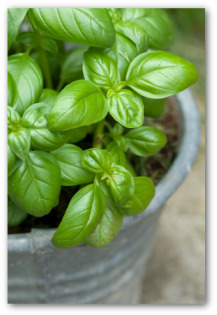
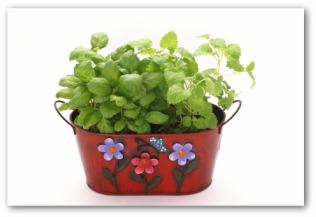
As long as you have a sunny garden spot and reasonably fertile soil, basil can be successfully done throughout the United States. Most gardeners who have grown, handled, and cooked a number of varieties have found that their cultivation requirements are not demanding at all. Basils also do well in container gardens located in full sun.


Growing Basil in Cooler Climates

In northern gardens with cooler climates, it is recommended to start basil seeds indoors. Basils prefer warm temperatures. It is best to have small plants hardened off and ready to go in the garden when the nighttime temperatures reach above 50 °F. It is possible to direct sow basil seed but it is advisable to wait until the soil has warmed.


Keep in mind, that basil plants that have been direct seeded are not generally as productive as transplants. Basil transplants easily. Basil seeds show a gelatin cover when they have been moistened, which remains until the seeds germinate.


growing basil

How to Start Basil Seeds Indoors for Transplant Outdoors

Seeds should not be covered with soil but sprinkled on the surface of the seed flat. Keep the basil seed uniformly moist during germination. Once the basil seeds have germinated, grow seedlings at temperatures of 65-70 degrees F.


Which Varieties to Grow


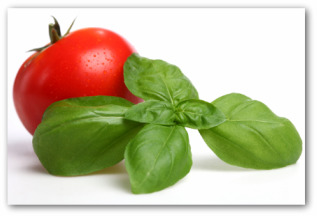
Sweet Green Italian basil is usually grown for its abundant crops of large leaves for using fresh, drying, or making pesto. Minimum is small leaved basil, sometimes called piccolo or bush basil, and is an excellent cooking type. Spicy Globe is sold as an ornamental herb to be used as a border or in containers. It can also be used in culinary dishes. Lemon basil has a distinct lemon fragrance and flavor. Cinnamon basil is an attractive large leafed herb with a spicy fragrance and flavor that is perfect for using fresh to flavor marinara sauces or making herbal vinegars. The list could go on and on with seed companies offering new choices every season! We have to get down to the dirt!

growing basil

Planting Basil Plants


If you are growing basil for the first time and want the herb primarily for using fresh and cooking, we suggest Sweet Green Italian and Lettuce Leaved for starters. These varieties are the easiest to grow and size up quickly. They also have the most familiar sweet basil flavor. Two or three plants of either variety will produce enough leaves to use fresh all summer and to harvest for winter.


How to Grow Basil

All varieties of growing basil produce longer if the blossoms are continuously removed from the plants. This action encourages the plants to set side branches and produce more leaves. Once a plant goes to blossom, it spends its energy flowering and maturing seed. The leaf quality and quantity decline.


Frost Warning for Growing Basil Plants!


Basils are very frost sensitive, so harvest their leaves before any threat of frost. Dry or store them in oil for use in winter. Basils are native to warm, temperate, and tropical regions.


Saving Basil Seeds


If you wish to save your own basil seed, select a few vigorous growing basil and allow the plants to grow uninterrupted to flowering and seed formation. Watch the flower and seed pots carefully so that you harvest the seeds for drying before they fall to the ground.

Culinary Herb Uses for Basil Plants


Basils can be used as an ingredient in culinary delights, potpourris, herbal teas, honeys, and vinegars. Growing basil can also be used as decorative borders for the vegetable garden or in patio containers.  http://www.vegetable-gardening-online.com/growing-basil.html