Showing posts with label Composting. Show all posts

Thursday, April 7, 2011

Make Your Own Compost Bin, Compost Bin Designs, and Building a Compost Bin


make your own comost bin
Make your own compost bin in your backyard. Compost bin plans and designs for turning yard debris and kitchen scraps into homemade fertilizer!


Turn some of your kitchen scraps and yard debris turns to gold for the garden. Make your own compost bin and turn yesterday's trash into tomorrow's vegetable gardening delights. Building a compost bin in your backyard is an easy way to contain decomposing organic matter which can help transform less than fertile soil into a virtual oasis. Although, there are many types of composting bins, our main focus will be using easy plans to make your own compost bin.


make your own comost bin

Compost Bin Plans and Ideas


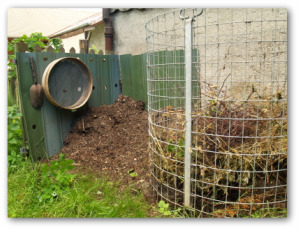
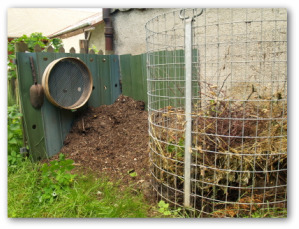
Basic Wire Compost Bin Design

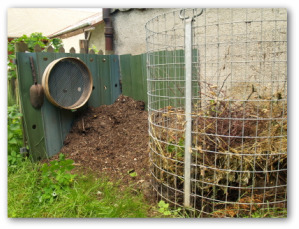
Wire compost bin designs do not produce compost as rapidly as solid walled design but it is a quick and inexpensive way to get the natural process started. The instructions below will help you make your own compost bin that contains nearly a cubic yard of material.


The following directions are for a bin around 4 feet high and 3 foot in diameter. A gardening space of about 8x4 feet is required to house this basic compost bin. This will allow ample room for raking and compost removal.


Necessary materials for assembly:

  • Chicken wire (about 12')

  • Four metal or wooden posts

  • Work gloves

  • Eye protection

  • Pliers

  • Tin snips

  • Sledge hammer


  • * If you need several bins made, it is cheaper to purchase a roll of wire.


    make your own compost bin

    Optional Wooden Posts

    Posts provide stability for the bin but make it difficult to move. Before you make your own compost bin decide if want it movable or stabilized in one specific location. A wire bin made without posts will be easier to lift, move, and provide easy access to the bottom of the heap which decomposes faster.


  • Fold the ends of the wire back to provide a smooth edge.

  • Shape the wire into a round or a barrel-like form.

  • Cut wire in six-inch lengths to securely tie the compost bin in a circular formation.

  • Fasten the ends of the wire with the ties.

  • Place posts tightly against the inside of the wire bin.

  • Hammer support posts into the ground.


  • Maintaining your Wire Compost Bin

    A wire compost bin allows good air circulation for decomposition. Pile your raked leaves, kitchen scraps, and lawn clippings into the compost bin. Layer "green" vegetable waste and grass trimmings with dried materials such as fallen leaves or wood chips.


    After six months to a year, your compost will be ready for the vegetable garden. Cut the wire fasteners to gain access to the compost. Remove the finished product with a spading fork. To re-make your own compost bin simply re-fasten the wire!


    Vegetable Gardening Tip when Making a Wire Compost Bin:

    Bear in mind when you make your own compost bin that galvanized wire will last longer than the non-galvanized type

    .


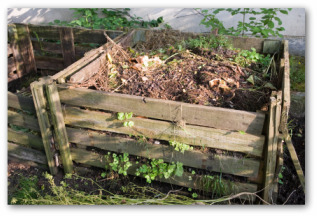
    Wood Compost Bin

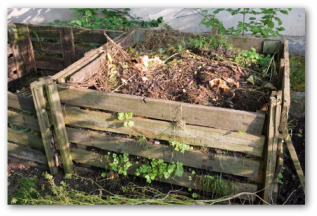
    If you need larger stationary bins, make a compost bin using lumber. When choosing the wood, be certain it is not pressure-treated. You do not want the metals used to treat the wood leaching into your compost.

    Composting is a beneficial solution in both improving your vegetable garden and reducing household waste. Although there are ready made bins available, making your own compost bin is the cheapest way to go for the handy do-it-yourselfer!


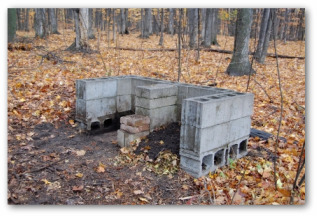
    Make A Concrete Block Compost Bin

    For more information on building a wood or concrete block compost bin, please click here.


    Keep the waste material moist for the decomposing process to continue. Plan on watering your compost bin at least once a week Water the top of the heap to adequately dampen several inches down. The outer portion of the cylinder insulates the inner part to help retain moisture.


    These compost bin plans and ideas can help you create a simple and easy compost solution in your backyard!

    Making a Compost Pile, Make Your Own Compost, Starting a Compost Pile


    growing hot peppers

    Easy plans for making a compost pile in your backyard. Recycle kitchen scraps and lawn debris to create your own rich organic compost that makes perfect fertilizer for your yard and vegetable garden.
    Amending the soil by making a compost pile both renews the ground and recycles natural resources. The best vegetable gardening course is to have your garden soil tested each year. Depending on the test results, follow the recommendations given to amend the soil.
    Knowing what nutrients are needed beforehand helps cut down on a number of cultivation tasks in a gardener's recycling plan.


    Making a compost pile is an ideal vegetable gardening technique to reuse the majority of your kitchen and garden waste and recycle it back into your garden. Composting is fundamentally a method used to speed up the decomposition process.
    Besides benefiting your garden beds, the mixture can be used in potting soil to start seeds indoors. You can also use the decayed matter as mulching materials to protect the roots of vegetable plants during dry, hot summers. Your finished product is sure to be a success by following the basic steps below.


    Starting a Compost Pile


    Start making a compost pile using either a one to two foot pile of leaves or 6 to 12 inches or more of compact material such as sawdust or grass clippings. You can compost materials such as nutshells, tree trimmings, hulls, hay, and straw.
    growing hot peppers


    Shredding the organic material first helps speed up the decomposing process considerably.
    Microorganisms go to work the fastest on smaller items of organic materials.
    Use any kitchen fruit and vegetable scraps, eggshells, coffee grounds, tea leaves, or garden wastes.
    Avoid using diseased plant waste, materials that have been treated with herbicides or pesticides, and meat or dairy scraps.

    Compost Bin Design Suggestions

    A compost pile does not have to be elaborate to work efficiently. A simple designed bin made with concrete blocks, fencing material, or lumber may be used. Stored out of the way but within a close reach of the gardening site, the bin could be any shape you desire. It should measure approximately 4 x 4 feet.


    Make Your Own Compost

    Spread a layer of fertilizer such as manure over the initial heap you have started. The nitrogen in the fertilizer helps activate the microorganisms, which speeds up the decaying process.
    After adding about a half cup of ground limestone, add a few shovelfuls of soil to provide starter microorganism colonies. (You can't see them but they are there!)


    Next, make sure the pile is watered well.
    Microorganisms work the most efficient in slightly alkaline, moist environments.
    As it becomes available, keep piling waste on top of the pile.
    When the layers thicken and become compact, repeat the previous layering steps of organics, soil, fertilizer, and watering.growing hot peppers

    Using a pitchfork, turn and mix the compost pile to provide air circulation for the microorganisms, about once every couple of weeks. This action also ensures that not only the center but all the parts of the pile will be heated.
    Microorganisms are most active when soil temperatures are above 60 degrees F. As the temperature in the pile rises, plant diseases and weed seed are destroyed.


    Making a Compost Pile--Pile it On!


    After making the compost pile and it has had time to age from six months to a year, blend the compost into the garden soil to a foot deep.
    As additional organic materials are added, the more the garden soil's texture improves. Make sure the compost is evenly distributed to the entire vegetable gardening area.
    When compost is introduced to the soil, it absorbs some nitrogen from the soil. To make amends for this, add two handfuls of 10-10-10 fertilizer for each bushel of compost used. Work the fertilizer thoroughly into the garden.    http://www.vegetable-gardening-online.com/making-a-compost-pile.html

    Compost Bin Plans, DIY Compost Bin, Easy Compost Bin Designs

    compost bin plans
    The following free compost bin plans to build at home, are geared to an average do-it-yourself vegetable gardener. You may use recycled materials when applicable to hold down costs. Safe tool use is encouraged by wearing safety glasses and gloves for added protection when putting the plans into place. These easy compost bin designs can be built is a weekend project.


    Single Sided Wood DIY Compost Bin

    A one compartment compost bin is sufficient to confine composting materials. Turning the heap and removing the finished product for supplying the vegetable garden is accessed through the loosened front boards. This design should be situated on a level piece of ground.


  • 1 4'-9" 2x2s


  • Six 3'-6" 2x2s posts


  • 24 4' 1x6s


  • 96 1-1/2" No. 10 galvanized wood screws


  • 4- 2-1/2" No. 10 galvanized wood screws


  • compost bin plans


    Compost Bin Plans : Necessary Tools


  • Hammer


  • Hatchet


  • Power drill


  • 1/8 inch twist bit


  • Compost Bin Plans : Step 1


    Use the hatchet to shave down the ends of the six 2x2 posts to a point. At the compost bin location site, pound in the four corner posts into the ground to a depth of six inches. The posts should be spaced apart 4 feet from front to back and 3 feet 10-1/2" from side to side. Hammer in the remaining two posts to the identical soil depth. Allow a one inch gap between the posts for the front boards.


    compost bin plans

    Compost Bin Plans : Step 2


    Starting at the bottom, attach 6 1x6 boards to the side posts on each side, allowing a ½ inch gap. Pre-drill pilot holes to use a couple of 1-1/2" screws for each board. A ½ inch gap between the boards allows for proper air circulation. After attaching the side boards, screw six 1x6 planks to the back of the compost bin using a couple of 1 and a half inch screws on each post. The remaining 1x6 boards should be loosely fitted into the formed slots of the front posts.


    Compost Bin Plans : Step 3


    From the leftover 2x2, cut two 3" pieces. Attach each end of the pieces with a couple of 2-1/2"screws. Pilot drill the screw holes first with a 1/8" drill bit to prevent the wood from splitting. Fit the completed cross bar across the top of the unit at the front.


    Compost Bin Plans : Mobile Wire & Wood Easy Compost Bin Design


    A mobile bin serves to contain a compost heap in a temporary location. When the time comes for the pile to be turned or finished compost to be removed, the container is taken apart and reset in a different garden spot. Fork the partially decomposed material from atop the old heap over into the emptied bin, which leaves the aged compost free at the bottom for use in the vegetable garden.


    Mobile bins can be constructed out of old wood pallets tied together or a roll of fencing or wire. Hardware cloth was used for this illustration stretched over four wood lap jointed frames.


    Materials List


  • 12' 36" wide, ½ " hardware cloth


  • Four 12' 2x4s


  • 100- ½ " No. 8 galvanized screws


  • Four hook and eye gate latches


  • Four 3" galvanized door hinges & screws


  • carpenter's glue


  • Tin snips


  • Table saw


  • Power drill


  • 1/8 inch drill bit


  • Power staple gun


  • C/W staples


  • Step 1


    Cut a total of 16 pieces by cutting each 12' 2x4 into four 3' long pieces.


    Step 2


    Cut three ½ "wide x ¾ " lap cuts at the ends of the 16 wood pieces. Be certain that the cuts are made from the identical side of each plank. Set the power saw blade to ¾" depth. Make multiple passes until the end material has been removed.


    Step 3


    Using the 16 boards, make four 3' square lap jointed frames. Pilot drill holes with drill bit initially to prevent the board ends from splitting. Use carpenter's wood glue and wood screws to join each lap joint.


    Step 4


    Use tin snips to cut the hardware cloth into four 3' square sections. Bend the edges back an inch for additional reinforcement. Center each cloth section section onto a frame. Staple hardware cloth every 4". Ensure the cloth is fastened tight enough to prevent sagging when the compost bin is filled.


    Step 5


    Connect each pair of wood frames with two hinges. Attach hook and eye latches on the outside of each connected frame. In the end, the L shaped sections should be latched together.


    Wire, Cinder Block, and Barrel Compost Bin Designs


    It is also easy to make a wire compost bin that is movable, or to convert a 50 gallon barrel into a compost bin. Cinder block compost bins are also a simple and practical way to go as    http://www.vegetable-gardening-online.com/compost-bin-plans.html