
Showing posts with label Herbs. Show all posts
Showing posts with label Herbs. Show all posts
Monday, May 16, 2011

Tuesday, April 26, 2011
How Do I Grow Herbs in a Window Sill?

Herbs can spice up a meal, fresh herbs can make it even better. Instead of spending money on herbs in a jar, you can grow an herb garden in a sunny window sill right in your kitchen. Grow perennial herbs, such as chives, mint, sweet fennel and lemon balm. Spice up dishes with annual herbs including anise, summer savory, cilantro and dill. You'll have fresh herbs year round without spending a lot of money.
Instructions
things you'll need:
- Grow lights or fluorescent lights (Optional)
- 6 to 8 inch deep container with drainage holes
- Potting soil
- Water can
- Tray or saucer
- Pebbles or coarse marble chips
- Sharpened pencil
- Water-soluble fertilizer
- Paper towel
- Give herbs between five and eight hours of sun per day, preferably in a window that faces south or west. Move plants to a different window sill to keep the herbs in the sun, or supplement low light levels using grow lights or fluorescent lights. Hang the lights 12 to 18 inches above the herbs.
- 2 Fill a 6-inch deep container with 5 inches of potting soil and an 8 inch deep container with 7 inches of potting soil.
- 3 Put the seeds into the potting soil following the directions for planting depth on the seed packet. Transplant herb seedlings from the pot you bought them in a 6- or 8-inch deep pot. Label the pots with the planting date and name of the herb.
- 4 Set the pots on a tray or saucer filled with pebbles or coarse marble chips to raise humidity around the herbs. Water the newly planted herbs just until water comes out of the drainage holes.
- 5 Check the soil moisture before watering herbs. Stick a sharpened pencil into the soil at the edge of the pot. A damp pencil means there is still moisture in the soil.
- 6 Thin herb seedlings to 1 inch apart when the plants have two or three leaves on them.
- 7 Apply a water-soluble fertilizer, such as 5-10-10, every two to three weeks if you use potting soil without fertilizer in it. Follow the directions on the label for exact times and amount.
- 8 Harvest from one-third to one-half of the bigger leaves on the herb plant at the time flower buds appear. Leave the small leaves on the plants. You can harvest more from annual herbs because they regrow quickly. Wash leaves and stems and let them dry on a paper towel before adding them to food. http://www.ehow.com/how_7187770_do-grow-herbs-window-sill_.html
The Window Herb Garden
Why Choose a Windowsill Herb Garden?
 Growing your own window herb garden can be fun, rewarding and it can save you a lot of money. Any professional chef or even part time, for fun chefs can tell you that the most costly ingredients in any dish are the herbs. Even though you'll only use a pinch of this herb or a dash of that herb, buying the entire container of herbs adds up to one hefty grocery bill.
It is a very good reason to grow your own herbs and why most people do. And not all of us have that large garden plot to grow our herbs, so many of us resort to window boxes, window sills or containers. A window herb garden doesn’t require very much attention, just a box, some seeds, a touch of fertilizer and dirt, some water and a bit of love.
Herbs aren't very difficult to grow. As long as you pay attention to them and give them lots of water when they look a little dry, and you put them in a window that gets a lot of sunshine, you'll soon see that your herbs will grow big and strong without you really needing to do anything at all.
Windowsill Herb Garden
Adding Color
The best part about having a window herb garden, except for the fact that you'll have a healthy supply of herbs for all your cooking needs, is that you will add color to your windows. Beautiful greens and whites, some yellows and other lush colors is what you get when you finally successfully grow all your own herbs in your window herb garden. The only difficult part is actually having to grow them!
How To Start
If you don't have a green thumb and you have no idea how to grow anything at all, even weeds, then you should do a little research first. Some stores may sell pre planted herbs that all you have to do is add water to have them grow. But you should be able to look up herb growing on the internet to get all the tips and tricks you'll ever need to grow all your favorite herbs in your own window herb garden.
It then becomes just as easy to get your own pot, seeds and soil and do it yourself. . You'll always have a healthy supply of your favorite herbs so that no matter what herbs you need to cook with, you'll always have them – and they smell good too!
The best part about having a window herb garden, except for the fact that you'll have a healthy supply of herbs for all your cooking needs, is that you will add color to your windows. Beautiful greens and whites, some yellows and other lush colors is what you get when you finally successfully grow all your own herbs in your window herb garden. The only difficult part is actually having to grow them!
How To Start
If you don't have a green thumb and you have no idea how to grow anything at all, even weeds, then you should do a little research first. Some stores may sell pre planted herbs that all you have to do is add water to have them grow. But you should be able to look up herb growing on the internet to get all the tips and tricks you'll ever need to grow all your favorite herbs in your own window herb garden.
It then becomes just as easy to get your own pot, seeds and soil and do it yourself. . You'll always have a healthy supply of your favorite herbs so that no matter what herbs you need to cook with, you'll always have them – and they smell good too!

Monday, April 11, 2011
Herb Gardening Basics 101
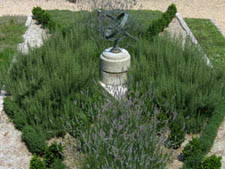
A formal English knot garden features standard herbs such as rosemary, oregano and thyme with a focal point, such as a sculpture, in the center.
Uses for Herbs
The most popular use for herbs is in cooking, and nearly every recipe can be enhanced with the addition of appropriate herbs. Can you imagine tomato sauce without oregano? Thanksgiving stuffing without sage? Some dishes are defined by the herbs they contain -- pesto without basil just isn't pesto!Herbs have many other uses as well. Many types make wonderful teas, either individually or combined in blends. Chamomile makes a soothing tea for unwinding after a hard day. Bee balm (Monarda) makes a tangy tea with citrus overtones. And in addition to being tasty, mint teas aid in digestion.
Many herbs are also believed to have medicinal properties. The echinacea that has become popular as a cold remedy is extracted from the purple coneflower, a common garden perennial.
Of course many gardeners grow herbs simply because they are attractive and durable plants. Bee balm not only makes a tasty tea, it is also a reliable perennial with lovely red, pink, or white flowers. And chamomile's daisy-like blooms brighten up any sunny border.
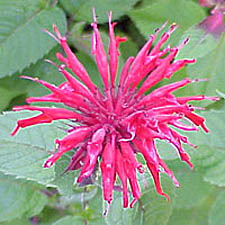
Bee balm (Monarda) is an attractive herb that butterflies and hummingbirds love as well. The flowers and leaves make an excellent tea.
Where to Plant
Plant herbs where you can get to them easily for frequent harvesting, especially if you plan to use them in cooking. Consider planting a special kitchen garden near the house, so you can readily harvest herbs, greens, and other frequently used crops. You can also grow herbs in containers or even window boxes.Most herbs prefer full sun -- at least 6 hours per day. Herbs that will tolerate some light shade include chives, cilantro, dill, and mint. Remember that if you plant perennial herbs in the vegetable garden, keep them in a separate section so you'll be sure to avoid them during spring and fall tilling.
Types of Herbs
Like all garden plants, herbs can be categorized as annual, perennial, or biennial. Annual plants grow for only one season and so must be planted each spring. Perennials live for several years. Their foliage dies back in the fall, but the roots overwinter and resume growth the following spring. And biennials grow for two years, growing foliage the first season, overwintering, then forming seeds and dying back at the end of the second season.Here are some examples of each type of herb.
Annual Herbs
- basil
- chamomile
- cilantro/coriander
- cumin
- dill
- fennel
Perennial Herbs*
- catnip
- chives
- lavender
- lemon balm
- lovage
- lemongrass
- marjoram
- mint
- oregano
- rosemary
- sage
- tarragon
- thyme
Parsley is one of the few common herbs that is a biennial. However, unless you want to harvest the seed, you can treat it like an annual and plant new plants each season.
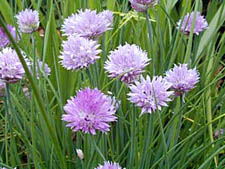
Chives not only produce mild, onion-flavored leaves, the flowers are beautiful and edible as well.
Herb Garden Design
Herbs can be grown with other plantings or in their own garden. You can create a traditional, formal herb garden with two paths intersecting at the center to create four symmetrical gardens. Each section can feature herbs grouped by theme, such as culinary herbs, medicinal herbs, and aromatic herbs. Try to grow herbs with similar growing requirements together for easier maintenance. You can decorate the center intersection with a pot or urn filled with attractive herbs. The paths can be edged with landscape edging, bricks, stone, or even well- trimmed, woody herbs such as lavender.Even though a formal herb garden is attractive, most gardeners would rather mix herbs in with other flower or vegetable plantings or grow them in containers. When growing herbs with other plantings, be sure they have enough room to expand and won't get shaded by tall plants.
Herbs make great container plants. To grow herbs successfully in containers or window boxes, you'll need a pot that has adequate drainage holes. Use fresh potting soil each year and keep the container well watered and fertilized. Try different combinations such as purple-leaved basils mixed with creeping thyme, or silver-leafed sage planted with curled-leafed parsley. Large perennial herbs, such as rosemary and lavender, can have their own pot and be over wintered indoors in cold climates. You'll be amazed at how attractive and useful these potted herbs can be.
Soil Requirements
In general, herbs prefer a moderately rich soil. An overly rich soil (or excessive fertilizing) can lead to vigorous growth. However, many people find that the flavor of overfertilized herbs is bland, probably due to reduced essential oil content.Many culinary herbs, such as thyme and oregano, are of Mediterranean heritage and are accustomed to growing in gravely soils. The soil in your herb garden should have excellent drainage. If yours doesn't, consider growing your herbs in raised beds or containers.
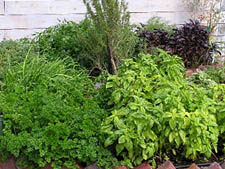
Culinary herbs with different leaf textures and colors are best grown close to the house where they can be easily harvested and enjoyed for their beauty.
Caring for Herb Plants
Most herbs will thrive with about 1 inch of water a week, similar to other vegetable plants. Herbs in raised beds and containers will dry out more quickly than those planted directly in the garden and may need more frequent watering. Keep garden beds weeded, especially early in the season as plants are getting established. If you have fertile soil, you won't need to add much fertilizer to herbs grown in the garden. For those in containers, you'll need to add a dilute, complete fertilizer such as 10-10-10 to keep the leaves green and plants growing strong.Once established, most herb plants are remarkably resistant to insect and disease attack. The oils that give them their aroma and flavor likely evolve to repel pests. However, keep an eye out for insects such as aphids, and diseases such as powdery mildew.
Harvesting Herbs
Harvest herbs by cutting back a shoot to just above a leaf. This will both provide you with a harvest and encourage nice, bushy growth on the remaining plant. In general, an herb's flavor is most pronounced when it is harvested just before the plant begins to flower and in the morning when the essential oils are most concentrated.Tips
- Heavily harvested herb plants can look untidy. Consider interplanting herb beds with annual flowers to camouflage the trimmed plants.
- Herbs can provide important habitat for beneficial insects. Dill and fennel are two herbs beneficial insects particularly like.
- Perennial mints, including spearmint, applemint, and peppermint, are very vigorous and can become invasive. Rather than planting them directly in the garden, grow the plants in containers, then sink the containers into the garden. This will contain the roots and limit spreading.
- Perennial herbs that are not hardy in your region can be overwintered indoors, then brought back outdoors in the spring. For example, in USDA Zones 7 and colder, bring rosemary and lavender plants indoors in late fall. Maintain them in a cool, bright spot over the winter, and move them outdoors again in the spring. In USDA Zones 8 and warmer, rosemary and lavender can be left outdoors year-round.
Other Great Herb Stories
Herbs in a PotOverwintering Herbs
Herbes de Provence
Herbal Tea Recipe http://www.garden.org/ediblelandscaping/?page=herb-gardening
Saturday, April 9, 2011
Great Kitchen Herb Garden Ideas for Growing Herbs

The use of herbs seems to have become surrounded by an aura of mystery, or worse still, misplaced sophistication. Yet once every good garden, including little plots, had its herb patch or kitchen herb garden — until recently almost a rarity, but now returning to favour.
These aromatic, attractive, useful and quite often health-giving plants deserve their rightful place in every garden. What herbs you grow will depend upon your tastes in food and cooking, even if you do not use all of them you will find many which are worth growing for their scent and character.
Well-planned, a herb plot can be as pretty as a picture, not so flamboyant as a herbaceous border, but with a charm of its own. Almost all herbs have flowers, and many are evergreen. You can either set aside a definite patch (perhaps where the evening light from the open kitchen door falls on them, so you will have them at hand when the unexpected guest stays to a meal), or use grouped herbs as a border along the vegetable garden path. In a small garden you can grow them in a mixed or shrub border with cushiony, bushy plants like thyme in the foreground. Some, like rosemary, fennel (that handsome feathery plant in green or bronze with green-yellow umbells that look so good with blue delphiniums or autumn flowers), borage (as blue and hazy as a summer day), sage, coriander, marjoram, may be planted in the mixed border to save room and provide interest, while the gardener with a collector’s instinct can create a patch full of character, pungency and subtle colour. Most herb flowers are green, lavender or pink. Nearly all provide winter decoration in the garden.
If, on a country walk, you have found wild herbs, such as purple thyme growing, you will know that these plants like a hot sun-baked situation. This applies to most garden herbs too. They like light, well drained soil that’s not very rich. Heavy soil affects their pungency! Exceptions are the mints or mentha, including peppermint and penny royal, which seem to do almost anywhere, and angelica, which likes moist shade. Parsley and chervil like moist, fertile soil.
Like other garden plants, herbs are annual, biennial or perennial. Some are best grown from seed, and although most of the others may be grown this way also it is often more practical and economical in the long run to buy one mature plant rather than to spend roughly the same money on one packet of seed which will give you so many plants to care for that they prove an embarrassment.
Best grown as annuals in the kitchen herb garden, are anise, basil, borage, caraway, chervil, coriander, cumin, dill, parsley, sweet marjoram, sorrel and summer savory. Most of the shrubs, including those like sage, rosemary and hyssop, can be grown from heeled cuttings. So many others, like lavender, are grown for scent, not eating.
Herbs which are used in quantity are best grown in rows, either along a path or across the vegetable patch or in good-sized groups (sow the seed inside a circle) in the border. Such herbs include parsley, chervil, chives, Florence fennel and sorrel. Allow plenty of space between the plants, so that you can gather them easily or group very dwarf growing kinds among the taller ones.
Some, especially mint, are inclined to wander by means of string-like over-exploring roots. To confine these, plant them in a bottomless bucket or a box sunk in the soil, its rim on a level with the surface.
Mints, or mentha, are more varied than many people realise. M. spicata is the one most widely grown and offered for sale yet it is nothing like so good in flavour as the woolly leaves of M. rotundifolia. Beg a root of this if you see it growing anywhere. It is quite unmistakable.
For drying, herbs should be gathered when the flowers have just opened fully and are at their best. Annual green and evergreen herbs may also be dried, but are best used fresh. By protecting them with cloches, by sowing seed in succession, or by lifting one or more of a certain kind and growing them in a or in pots or boxes in a greenhouse, or even on a sunny window sill you can have fresh herbs in the winter.
You can force mint for winter sauce. Fill a box or some large pots with roots which look like (and are) underground stems. Cut them in pieces and just cover with soil. Bring into a warm greenhouse or a warm window sill in relays. If warm enough, sprigs can be cut after three weeks. Keep moist.
Parsley seed needs to be sown every other year for a continuous supply, although you can, of course, make a fresh mowing each year.
There are three recommended seasons for sowing, February, May and July, but you should use your discretion and sow according to seasonal conditions. I find that August is often a good time, July sometimes being cold and wet.
 The seeds take a long time to germinate so do not worry if they do not appear for five or six weeks. Sow a few radish seed in the shallow drills along with the parsley seed. These will come up quickly and so keep you reminded that there is a crop to come.
Sow the seed thinly. You may need only a small packet; a quarter ounce, for example, is sufficient for a 5o foot row. Thin out to 2 or 3 inches apart when the parsley plants show their first curly leaf. Later on thin plants to 6 to 8 inches apart. You can transplant the thinnings. Keep the leaves continually cut to induce the plants to keep growing.
We expect parsley to be green and curly. Fine Moss Curled in fact is a seed catalogue term. The French parsley is nothing like so attractive in appearance yet its flavour is far superior; it is good for drying and keeps greener. Hamburg parsley has similar foliage to French which can be used in the same way but its succulent roots may be cooked like parsnips. They are smaller but finer in flavour and make a good crop for the small kitchen garden.
Chervil is similar to parsley in appearance. It goes to flower much more rapidly, being an annual and for this reason should be sown in succession. I sow it at fortnightly intervals through summer, demolishing one crop when the next is ready. A pinch of seed gives many plants. They can be transplanted, but this checks growth.
Chives are like many other bulbous plants, best lifted and divided frequently. Given a good soil and plenty of sun, they will grow surprisingly well and provide leaves until late autumn, so long as these are cut frequently. Flowers can be eaten. Lift and divide plants in spring pulling them apart and replanting smaller portions. You can grow chives in a pot outside on the window sill but remember to water it often.
Thyme will grow anywhere, except in heavy clay. The plant loves sunshine and looks delightful scrambling over the edge of a sun-baked stone, or even cement, path. Plant in spring and replant every three or four years.
Sage, too, will grow in ordinary soil, but given a sunny, dryish spot, it will grow into a fine bush. It should be planted in late spring. I have one three years old and three feet through.
It pays to fuss over a sage plant in its first year, watering well in hot dry weather and nipping out the young tips to encourage bushiness. Old plants sometimes become very leggy. When this happens, the plant should be renewed by seed sown in heat in March or by cuttings taken in a frame in April. Or, if like me you have “green toes”, try pulling off a shoot from the plant and firmly heeling it into the soil.
Originally from the tropics, Sweet Basil is a half-hardy annual. Seeds should be sown in a greenhouse, pricked out and hardened off before planting outdoors as with any other half-hardy annual. When they are first put into the soil, see that the young plants are shaded from the sun or they may quickly dry up. Keep them well watered. Gather the tips and leaves when coming into flower, dry and powder.
Pot Marjoram, another labiate, will grow anywhere, but like the others really needs sun to do its best. Plants need not be divided each year, but they do benefit from an annual dressing of manure.
Rosemary is a delightful shrub which, in a sheltered garden, will grow high, wide and handsome, as visitors to the Channel Islands and all points south will know. In winter and early spring, the stems are studded with blue flowers. It will grow in ordinary soil and, so I have found, in a windy spot, but in hot weather it should never be allowed to become dry. Plant in April.
Summer Savory is a hardy annual. Seed may be sown in a sunny spot directly into the soil. Thin the seedlings to six inches apart. Give plenty of water in dry weather. Pull the plants when they are in flower and hang for winter use.
Tarragon is related to Lad’s Love, wormwood and other pungent, artemesias. Ordinary soil will do so long as it is dry and in a sunny spot. Plant in spring and divide each year. Cuttings may be taken and struck in a temperature of 55 deg. F. The leaves should be cut at the end of summer and dried. From an infusion of these, we can make tarragon vinegar. Like the mint, a few roots may be boxed or potted and brought into a warm greenhouse in October to produce succulent shoots (luring winter.
All these plants should be gathered for drying when the plants are in flower, for then the leaves will be quite mature. Young shoots are too succulent for drying. Choose a fine day to gather them. I like to feel them sun-warm. Divide them into small bunches, cut off dead and dying leaves and any pieces of root. Wash thoroughly, later drying off with a cloth. String the bunches on sticks for easy handling. Hang them in a hot greenhouse, in a still-warm oven, before a fire or in an airing cupboard.
When the leaves are dry enough to be no longer soft to the touch, tie each bunch in a paper or polythene bag to protect it from dust, stems at the open end, fastened tight by an elastic hand and hang in a dry place.
Borage is mainly used in its fresh state, the sprigs are used to flavour fruit cup or individual leaves can be dipped in batter and fried. Once sown in March in a sunny spot, it will reseed itself every year. You will need to thin out the young plants rigorously. The plant is a pretty one with really blue flowers.
Some herbs grow very large and some can become a nuisance. You can take advantage of the size of some of them. Angelica, for example, is such a handsome plant architecturally that it really deserves to be grown where it can be admired towering against the skyline. If you have a water garden, it will look well in this vicinity. It will also look well in a courtyard; and you can be happy that if the children want to use its hollow stems as pea shooters, they will be quite safe. Unlike many wild plants of this family this is not poisonous. The umbelliferaea provides us with many vegetables and herbs, but do not assume that because one part of the plant is wholesome all parts are. This is not the case. Parsnip roots are good but their leaves and seeds should not be eaten. Coriander, caraway, dill, parsley seeds can be used as flavouring but one should not try the others. They may not be poisonous but it is best to be sure.
Horseradish is much esteemed but do hesitate before you plant it in the garden because it can become a troublesome weed. Don’t allow perennial fennel to drop its seed or plants will pop up unexpectedly in the wrong places.
http://www.gardeninginfozone.com/great-kitchen-herb-garden-ideas-for-growing-herbs
Thursday, April 7, 2011
Базилик
автор Елена Кулишенко, фото автора
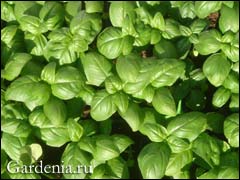
Базилик в Италии является одной из излюбленных пряностей. К тому же, это ценное ароматное растение образует густой ветвистый кустик и очень декоративно в саду.
Базилик камфорный (Ocimum basilicum) - однолетнее травянистое растение семейства яснотковых. Прямой четырёхгранный стебель базилика достигает в высоту 20-60 см.
Блестящие продолговато-овальные листья базилика с редкозубчатым краем в зависимости от сорта могут быть окрашены в ярко-зелёный, зелёно-фиолетовый цвет или различные оттенки фиолетового.
Выведены компактные и высокорослые сорта базилика с плоскими или гофрированными, с мелкими или крупными (длиной до 6 см), узкими или широкими душистыми листьями. Собственно, из-за божественного аромата декоративных листочков и выращивается это замечательное растение.
Карликовые мелколистные сорта базилика отлично подходят для горшечной культуры.
Базилик цветёт в июле-августе, привлекая в сад множество насекомых-опылителей. Мелкие, но богатые мёдом белые, розовые, красные, сиреневые или светло-фиолетовые цветки базилика располагаются в пазухах верхних листьев, а также собраны в красивые длинные кисти соцветий, венчающих верхушки побегов. Семена базилика созревают к концу сентября; плод – чёрно-фиолетовый орешек.
К началу цветения листья базилика содержат максимальное количество эфирного масла с приятным запахом. Если посадить базилик на солнечном месте в плодородную дренированную почву и поливать в сухую погоду, он щедро отблагодарит - станет пышным кустиком с множеством ароматных листочков.
При удалении появляющихся цветоносов кустик базилика будет активно ветвиться, что позволит проводить срезку молодых листьев и нежных верхушек побегов несколько раз за сезон.
Родиной базилика считается Азия. Вначале это растение культивировалось в Индии, на Цейлоне и в Иране. Потом через Среднюю Азию базилик попал в Европу (сначала - в Италию и на юг Франции).
Родовое название базилика происходит из греческого языка и образовано от слова «пахнуть», а видовое латинское basilicum означает «королевский, царский». Объединённое родовое и видовое название переводится как «благоухание, достойное королей» и подчёркивает особенность базилика и ту важность, которую придавали древние греки и римляне этому растению.
В разных странах с базиликом связано много поверий. В Индии верили, что листик базилика предоставляет для умершего "паспорт" в рай. В Древнем Египте базилик использовали при мумифицировании, венки из базилика найдены в пирамидах.
В древних трактатах описаны лечебные свойства базилика. Издавна известно: базилик обладает дезинфицирующим свойством, его эфирное масло обладает бактерицидным действием. Базилик оказывает благоприятное действие на желудочно-кишечный тракт, на систему кровообращения, на центральную нервную систему. Отвар листьев базилика применяют при простудных заболеваниях верхних дыхательных путей, при лечении мочевыводящих путей. Помогает базилик при стоматите и аллергическом дерматите, при плохом аппетите.
Древние римляне считали базилик символом плодородия, любви и семейного благополучия. И до сих пор базилик - одна из самых почитаемых и популярных ароматических трав в Италии.
Приятный, душистый аромат листочков базилика особенно силён, когда растение вот-вот зацветёт, вобрав в себя энергию солнышка. Поэтому перед цветением и нужно собирать молодые листочки базилика. Именно в этот период в них накапливается максимальное количество ароматного эфирного масла, дающего неповторимый запах. Однако и "старые" листья базилика придают блюдам вкус весьма пикантный.
У некоторых сортов базилика аромат листьев перекликается с другими пряновкусовыми растениями (например, улавливаются нотки душистого перца, гвоздики, лимона и др.).
Специалисты утверждают, что имеется 40 типов ароматов базилика. Но я встречала в Италии всего два с сильным, пронзительным запахом: это базилик генуэзский (basilico genovese) и базилик наполетанский (basilico napoletano).
По аромату базилик превосходит мяту, а его листья имеют лёгкий горьковато-терпкий вкус и широко применяются в кулинарии.
Листочки базилика используются в пищу как свежие, так и сушёные (толчёные). Они понемногу, без злоупотребления добавляются в разнообразные блюда.
Свежие листики базилика хороши в зелёных салатах, придавая им приятную горчинку с лёгким привкусом сладости. При добавлении базилика получаются исключительно вкусные блюда - мясные, рыбные, крабовые, черепаховые, яичные, куриные, сырные, творожные, овощные (из баклажанов, перца и др.), а также колбасы. Используют базилик при мариновании грибов и овощей, при изготовлении ликёров. Базилик добавляют во все соусы с помидорами, в овощные супы, в паштеты. Базилик является обязательным ингредиентом при изготовлении знаменитого итальянского соуса - песто.
Небольшие секреты, которые открыл мне шеф-повар в одном ресторане:
- базилик добавляется в блюдо в последний момент перед употреблением, чтобы он не потерял свой неповторимый аромат;
- нельзя резать базилик ножом, лучше измельчать листочки с помощью пальцев.
Сушить листочки базилика нужно в тени при хорошей циркуляции воздуха: либо на ткани, раскладывая их тонким слоем, либо подвешивая срезанные верхушки побегов в маленьких пучках.
В моём саду я использую базилик и как декоративное растение. Я посадила базилик вокруг молодых деревьев (они ещё не дают тени), и теперь деревья растут в окружении ароматных красивых бордюров.
Елена Кулишенко (г. Гуидония, Италия)
Gardenia.ru
Кулинария на сайте Gardenia.ru
Lemongrass Tea

These are the lemongrass plants growing profusely in pots of my balcony 'garden'. This fragrant plant is easy to grow, I have more than enough that I need for everyday cooking. I often share with family and friends several stalks at a time or else, the pots would not be able to hold all the leaves!
I am happy I have this plant so that I can easily get them fresh. Most of what are available in the market are already dried ones. They do not lose their flavor though, so even the dried lemongrass can still be used for cooking.
Usually, we use the stalk, the white part near the root (where there is more concentration of the citrusy smell) as flavoring for cooking soups, curries or stews. It is used for stuffing roast chicken, for pounding into sauces. What about the leaves? Sometimes, we include those into cooking as well. But more often than not, we infuse the leaves into tea.
It is very simple actually. I use 10 leaves, cut them up into 2 to 3 inches. Wash them well and boil them in a liter of water. The resulting liquid is very fragrant, rich lemon gold in color, very refreshing!

You can drink it hot or cold. (I prefer it hot, no sugar added.) You can drink it as is, or add a simple sugar syrup, or add a sugar substitute such as stevia, if preferred.
To make sugar syrup, just boil 1 cup water with 1 cup whit sugar until sugar is melted and the liquid turns a little syrupy consistency. Add to any of your preferred drinks.
Last week, a friend forwarded to me an email citing a study done by the Ben Gurion University at Negev, Israel. The study shows lemongrass can be a cure for cancer. Read the full transcript here. The study says that lemongrass contains "citral" the component that gives lemongrass its citrusy scent and aroma; and that this component causes the cancer cells in our body to die. The cancer cells die while the healthy cells live, thus helping the cancer patient to be healed.
Hubby and I tend to believe that the anti-cancer properties of the lemongrass is true, not just because of the testimonies of many people but because we believe that God has indeed gifted us many natural herbs and medicines that can be found in nature, in plants. Further studies are being conducted to confirm this initial findings. Meanwhile, we can enjoy this delicious, refreshing lemony tea that may have healing effects on our bodies as well.
http://heartandhearth.blogspot.com/2008/07/lemongrass-tea.html

How to Grow Cilantro, Planting Cilantro, and Growing Cilantro
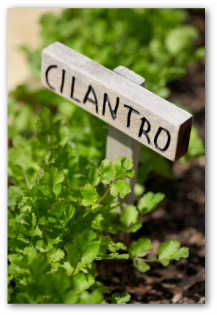
The best tips for how to grow cilantro in both indoor container gardens and outdoor vegetable gardens. Easy steps for planting, growing, harvesting and preserving cilantro plants.It is easy to learn how to grow cilantro, especially in container gardens. One of the main growing requirements for the culinary herb is to provide wind protection. Cilantro is also called coriander and Chinese parsley.
Several centuries after the departure of the Romans from Britain, herb and vegetable gardens began to reappear. Rather than being grown only in the villas of the rich and powerful as before, herbs and vegetables sprang up and became a common sight in monasteries. Gardening allowed the monks self-sufficiency and aided in the treatment for the sick and disabled. By Elizabethan times, all large estate owners grew elaborate walled or edged herb gardens. Then as now, most plants were cultivated for medicinal and culinary uses.
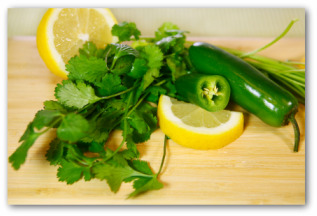
How to Grow Cilantro
1. Plant cilantro seeds or transplants in rich, well-drained soil in full sun.
2. Follow planting instructions on cilantro seed packet for depth and spacing information when planting from seed.
3. Cilantro plants are easily blown over so be sure to protect the herbs from wind damage.
4. The plant grows an average 24 to 36 inches in height.
5. Sow seed once the soil is warm in the spring.
6. Cilantro can be grown suitably in container gardens as well.
The bright green lacy leaves of cilantro grow on the lower part of the plant and look similar to the flat-leaved Italian parsley. The large sized annual has a leaf and root flavor that is a cross between sage and citrus.
How to Grow Cilantro Indoors
If you plan to grow herbs indoors on your windowsill, keep in mind that the humidity is often low in homes equipped with central heat and air units. Avoid the dehydrating effects by squeezing as many plants onto the sill as possible. The herbs and their compost both will slowly release moisture.
Since you are growing your own vegetables, include several major culinary herbs to complement in the vegetable garden and homemade dishes. Herbs supply big taste without requiring a lot of growing space.
Planting Cilantro in the Garden
A patch near the kitchen entrance is convenient, or you can add herb plants into your vegetable garden.Group herbs on either side of a garden path, or make an edging of several types along the pathway.
Another handy place to grow herb plants is in the section devoted to lettuce and other greens. Include a row of annuals such as parsley, cilantro, chervil, basil, dill, and sweet marjoram. The perennial herbs like chives, thyme, tarragon, oregano, sage, and mint should be planted in a location where they are not disturbed by annual garden cultivation.
One of the easiest ways to enjoy cilantro and other herbs is to buy several small plants and grow them all together in a container situated on a patio or deck. Cilantro prefers a place in the sun but can be grown successfully in partial shade. Herbs and vegetables make compatible bedfellows in the garden, as they can grow in the same enriched soil.
Harvesting Cilantro
Cut the leaves to use fresh as you need them. You can dry herbs for winter use in bunches suspended from rafters indoors or near a hot-air vent.
Uses for Cilantro
Use the fresh or frozen cilantro leaves in potatoes, clams, and oysters. Fresh cilantro leaves can be used for salads, salsa, guacamole, and relishes.
Preservation of Cilantro
Harvest fresh, young cilantro leaves and freeze them promptly. Frozen cilantro leaves are about equal to fresh leaves in taste. Dried herbs are about twice as strong as fresh. The intensity of the flavor depends somewhat on the condition of the leaves when dried, the care used during the drying process, and storing conditions. http://www.vegetable-gardening-online.com/how-to-grow-cilantro.html
Growing Sage, How to Grow Sage, Harvesting Sage
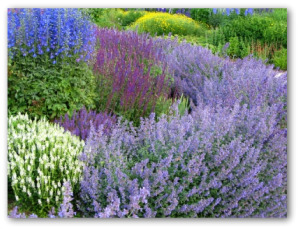
Tips for growing sage in an herb or vegetable garden. Learn how to plant, grow, start new sage plants, and harvest sage in your home garden.
This ancient herb is most popular as a food seasoning for meat, eggs, soups, gravies, fish, and Mediterranean dishes.
Sage is also a necessary ingredient for preparing the stuffing that goes into the Thanksgiving turkey!
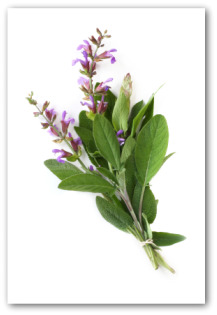
Sage is an evergreen perennial woody plant with several stems, which branch up to about 2 ½ feet.
The shrub has a strong taproot and its soft leaves are gray-green, pebbly textured, lance-shaped, and finely toothed.
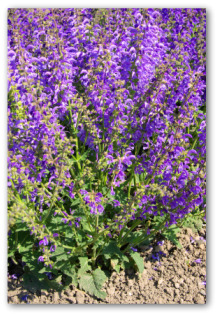
Spirals of lovely colored violet blue blossoms appear in the summertime.
Varieties of Sage
There are numerous varieties of sage.
The best culinary sages are the plain narrow leafed and non-flowering broad leaves types.
One or two plants should be sufficient for culinary use.
However, growing sage plants are also beautiful as ornamental plants in borders, flower, or vegetable gardens.
There are dwarf varieties that grow under the average three foot tall.
Some types of the herb are very ornamental such as Jerusalem Sage.
The leaves of this variety are sometimes made into a tea.
The yard high Holt's Mammoth is favored because it is fast growing and does not die back.
How to Grow Sage
Grow the herb in well-drained, rich soil, in full sun, and provide protection for the plants from cold winds.
Propagate by layering or from cuttings in spring and summer.
Layering is a foolproof method of encouraging the stem of a woody perennial such as sage to make roots of its own while it is still nourished by the parent plant.Hardy herbs like sage can be started by rooting several cuttings together in a small pot and then transferring them as a single plant.
Striking is a propagation technique where small cuttings are taken from the parent plant to create new plants.
Striking Cuttings for Sage
Caring for Growing Sage Plants
Pinch off tips of shoots to encourage bushy growth and keep the plants' compact for several months.
Trim growing sage frequently for best results.
Renew sage plants every 4-5 years as scrubs become spindly.
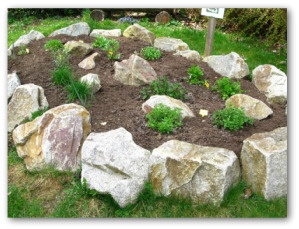
Mounding Sage to Start New Plants
Evergreen perennials such as growing sage can quickly develop into impressive mounds of shrubby growth.
When old woody herbs develop lower stems, they can be propagated by mounding.
Harvesting & Storing Sage
Medicinal Uses for Sage
The medical uses for growing sage include making sage flavored tea which counteracts sweating.
An infusion of the herb has been used in the past to treat anxiety, depression, and liver disorders.
Homeopathic preparations use the herbs as a remedy for menopause symptoms and poor circulation.
The leaves are antiseptic and can be used in gargles for laryngitis and tonsillitis; as a mouth freshener and teeth cleanser. http://www.vegetable-gardening-online.com/growing-sage.html
Growing Basil, Planting Basil, How to Grow Basil
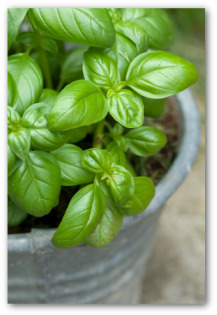
Tips for growing basil in your vegetable garden. Learn how to plant, water, and care for basil plants, and what varieties are best for home growing!
As long as you have a sunny garden spot and reasonably fertile soil, basil can be successfully done throughout the United States. Most gardeners who have grown, handled, and cooked a number of varieties have found that their cultivation requirements are not demanding at all. Basils also do well in container gardens located in full sun.
Growing Basil in Cooler Climates
In northern gardens with cooler climates, it is recommended to start basil seeds indoors. Basils prefer warm temperatures. It is best to have small plants hardened off and ready to go in the garden when the nighttime temperatures reach above 50 °F. It is possible to direct sow basil seed but it is advisable to wait until the soil has warmed.Keep in mind, that basil plants that have been direct seeded are not generally as productive as transplants. Basil transplants easily. Basil seeds show a gelatin cover when they have been moistened, which remains until the seeds germinate.
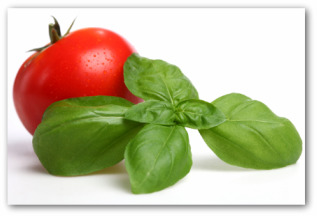
How to Start Basil Seeds Indoors for Transplant Outdoors
Seeds should not be covered with soil but sprinkled on the surface of the seed flat. Keep the basil seed uniformly moist during germination. Once the basil seeds have germinated, grow seedlings at temperatures of 65-70 degrees F.Which Varieties to Grow
Sweet Green Italian basil is usually grown for its abundant crops of large leaves for using fresh, drying, or making pesto. Minimum is small leaved basil, sometimes called piccolo or bush basil, and is an excellent cooking type. Spicy Globe is sold as an ornamental herb to be used as a border or in containers. It can also be used in culinary dishes. Lemon basil has a distinct lemon fragrance and flavor. Cinnamon basil is an attractive large leafed herb with a spicy fragrance and flavor that is perfect for using fresh to flavor marinara sauces or making herbal vinegars. The list could go on and on with seed companies offering new choices every season! We have to get down to the dirt!
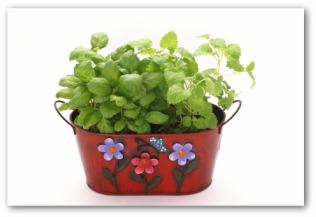
Planting Basil Plants
If you are growing basil for the first time and want the herb primarily for using fresh and cooking, we suggest Sweet Green Italian and Lettuce Leaved for starters. These varieties are the easiest to grow and size up quickly. They also have the most familiar sweet basil flavor. Two or three plants of either variety will produce enough leaves to use fresh all summer and to harvest for winter.
How to Grow Basil
All varieties of growing basil produce longer if the blossoms are continuously removed from the plants. This action encourages the plants to set side branches and produce more leaves. Once a plant goes to blossom, it spends its energy flowering and maturing seed. The leaf quality and quantity decline.Frost Warning for Growing Basil Plants!
Basils are very frost sensitive, so harvest their leaves before any threat of frost. Dry or store them in oil for use in winter. Basils are native to warm, temperate, and tropical regions.
Saving Basil Seeds
If you wish to save your own basil seed, select a few vigorous growing basil and allow the plants to grow uninterrupted to flowering and seed formation. Watch the flower and seed pots carefully so that you harvest the seeds for drying before they fall to the ground.
Culinary Herb Uses for Basil Plants
Basils can be used as an ingredient in culinary delights, potpourris, herbal teas, honeys, and vinegars. Growing basil can also be used as decorative borders for the vegetable garden or in patio containers. http://www.vegetable-gardening-online.com/growing-basil.html
Subscribe to:
Posts (Atom)