Showing posts with label Frugal Gardening. Show all posts

Saturday, April 30, 2011

Backyard Landscaping on a Budget

Landscaping adds a finished touch to a home like nothing else can. Beautiful hedges, flowering perennials and neatly edged gardens complete the exterior of a home. Landscaping on a budget begins with the knowledge that you'll be doing your own work. Hiring a contractor to beautify your backyard offers a beautiful landscape and an empty wallet. You'll need to arm yourself with knowledge about landscaping, soil preparation and the best plants for your area to create a plan for the ideal backyard landscape.
  1. Creating a Plan

    • Grab a piece of graph paper and sketch out your home exterior, including any permanent features. If you have a plan, you'll be able to control the spending. Backyard landscaping often presents difficulties with design and expense because of the increased amount of space. Focal points can be just about anything from a pool to a special tree or plant, a wooden deck or patio. Choosing a center point helps with symmetrical design, as well as limiting the expense of plants and shrubs.
      Choosing a few types of plants and scattering these throughout the landscape creates a sense of unity to the backyard. In the same vein, choose three to four colors of flowering annuals or perennials for a sense of continuity. Vary heights of plants in a single garden with tallest at the center or back, working by height to the lowest plants in the front. This gives the illusion of many plants in the garden. If you've got a fence, don't assume you need to line the fence with a long rectangular garden. Save money and create a pleasing landscape by simply creating an irregularly shaped garden in the corner of the fence.

    Choosing Plants

    • Variegated hosta.
      Plants often overwhelm new landscapers with choices and decisions. Landscaping tends to be a rather permanent addition to your home, so you want to do it right the first time. Consult with your local garden center for recommendations before making any purchases. Always read the attached information tab on every plant for sale. These cards provide planting information, sunlight requirements and watering recommendations. Save money and time by doing research to choose the best plants for your backyard.
      Annuals offer immediate color but only last one season. Perennials and shrubs bloom year after year and often expand in size. This expansion often results in thinning, which creates more plants that will need a home in your backyard. Keep propagation in mind when initially purchasing plants. Plants can be quite expensive, but it lessens the punch a little when you realize you'll get more than one plant out of a gallon pot.
      Choose plants that grow best in your area and limit the number of chosen plants. Although your garden might seem sparse the first year, new growth and expansion will use up those blank spaces quickly. Add any choices to your backyard design plan. Make sure you take into account any soil conditions, as well as shade/nonshade areas before making any plant purchases.

    Soil Preparation, Mulch and Edging

    • Consider any purchased plant an investment that needs a proper place to thrive. Most likely, your backyard is unconsolidated fill dirt put in place by the builder. Soil preparation will help protect your investment and should be figured into your landscape budget. Add soil conditioners, such as peat moss and compost, by simply dumping these products into the garden area. Turn over the top 12 inches of soil with a rototiller or by hand.
      Mulch adds a finished look to any landscape and aids your plants by retaining water. Mulch has the added benefit of suppressing weed growth. Bags of mulch cost about $3 (sometimes less on sale), and you just can't beat this addition for creating a groomed look to your backyard. This investment also helps over time as the mulch breaks down and enriches the soil. Edging around the gardens also adds a finished look to the backyard and helps retain the mulch inside the garden. Garden borders come in many materials, such as plastic, wood or more expensive stone.   http://www.ehow.com/way_5272329_backyard-landscaping-budget.html

How to Landscape on a Small Budget

How to Landscape on a Small Budgetthumbnail
Plan carefully to make the most of your landscape dollars. Sketch out your yard and include the contours of your home along with any patios or decks, walkways, driveways, paths, flower beds and retaining walls. Add features you want, and then split the project into phases so you can complete a little at a time to minimize the amount of money you need to spend all at once. Consider setting up a consultation with a landscape architect and having her look over your sketch. You can get advice for much less than you would spend if you had the plans drawn up from scratch.

Difficulty:
Moderate

Instructions

    • 1
      Use gravel, concrete pavers or poured concrete for the most inexpensive paths and walkways. If using gravel, select small pieces of angular gravel (labeled "1/4-inch minus") for the least amount of slippage underfoot. Avoid pea gravel or other smooth stones. Attack weeds as you see them pop up.
    • 2
      Furnish existing decks and patios with inexpensive seating and occasional tables. Check big box stores, thrift stores and yard sales. Deals can often be found at summer's end. Dress up the area with a thrifty outdoor rug, some plants in containers, and perhaps some garden-style wall art. Add tiki torches, outdoor lamps, post lights or candle lanterns for evening ambiance.
    • 3
      Add a do-it-yourself water feature. Liners, pumps and fountains are available at home improvement stores and can easily be added to your yard, deck or patio. Create a retaining wall wherever you need one using textured concrete blocks made for this purpose. A trellis or arbor is another easy addition and can be enchanting and create privacy.
    • 4
      Sharpen lawn mower blades approximately every six weeks during summer months so the lawn stays healthy. Use thin layers of chopped-up grass clippings and some slow-release nitrogen to fertilize the lawn and help keep it green. Consider planting fescue seed, which is drought-resistant and doesn't need a lot of fertilizer to flourish.
    • 5
      Outline new flower beds with a garden hose to achieve contemporary curved shapes, and then install edging to define the beds and keep the lawn from encroaching. Enrich the soil properly with compost and other add-ins according to the advice of nursery personnel or the cooperative extension office in your area. Mulch with organic materials such as pine needles or shredded leaves, and check with your city to see if it will provide free mulch. You can apply these over layers of newspaper for extra weed control.
    • 6
      Invest most of your plants budget in trees, shrubs and flowers native to your area since these are most likely to flourish. Plant perennials and put in fewer than you think you need. You can divide them next year and fill in the beds then. Start plants indoors from seed, purchase plants and trees in late summer when they are on sale.
      It often pays to invest in the biggest trees you can afford since they grow slowly and larger ones have much more impact on a landscape. However, investigate carefully. With some species, smaller trees are set back less by transplanting than larger trees, and will actually grow large faster.
http://www.ehow.com/how_7591368_landscape-small-budget.html

Wednesday, April 27, 2011

Organizing Seed Packets

Hey guys!! I’m so glad you could join me, Jill, Amy, and Megan for another awesome Homestead Barn Hop! It has been so much fun visiting everyone’s homesteads and seeing what you’ve all been up to! Keep the great ideas coming!

This weekend I’ve been working on organizing my entirely-too-many seed packets. For a newbie like me, it’s hard to keep track of what to plant when, what to start indoors, what to direct seed, etc. when all I can see is a stack of seed packets in a tub. Sorting through them one-by-one trying to figure it all out just wasn’t working for me. I needed a better system.
So, I searched the house and found a plastic storage container with a lid that I thought would work perfectly for my project. Using large index cards, I made monthly dividers to file the seed packets under.
Next, I went through my stash of seeds and sorted them into groups: produce, herbs, and flowers.
Garden Produce Seeds
Starting with the fruits and veggies, I looked up each plant to find out when was the best time to plant that particular seed in my area. I also noted whether it should be started indoors, and what that start date was, or if it should be direct seeded into the garden. Once I knew when I needed to worry about dealing with that pack of seeds, I could file it under the correct month.
So, for instance, in March I have: spinach, lettuce, swiss chard, carrots, and parsnips.
On the back of each index card I also have written which seeds should go under that month, and whether they should be direct sown or started indoors, plus any other helpful tips I may want to remember.
Herb Seeds
Next, I worked on sorting my cooking and medicinal herbs. I’ll file them by month as well, though most of them are to be planted at about the same time- after the danger of frost. Some are to be started indoors (which I probably should have already done a couple of weeks ago), so I’ll get on that this week. I’m researching the herbs more thoroughly though, since the majority of them are perennials and will only need to be planted once. I’ve been looking each one up, determining when to plant, how to plant, and where to plant (full sun/part shade), and how tall they will grow.
I’m charting what I’m finding about each plant, so that I can map out where I will put them. I’m also writing any specifics about that plant on the seed packet so I won’t lose the information. I’ll file them away in my box once I’m done.
Flower Seeds
In the wipes container in the back of the box is where I have all of my flower seeds. This will be the first year I’ve even bothered with flowers. Now that I know how important they are for attracting pollinators though, I don’t wanna be without them! Plus… they’re pretty. And some of them make great companion plants for the veggies in my garden.
I’m not filing them by month since pretty much all of them are to be sown outdoors after the last frost, though some needed to be started indoors, in which case I’ve begun doing so.
I’m thinking this will be a great way for me to stay on top of things and not fall behind. It’s easy to miss planting something, or get a late start, when it isn’t laid out nicely for you.
Do you organize your seed packets in any particular way? I’d love to know what you’ve found to work best for you!
If you’ve done something constructive this week, learned something new, or tried a new recipe, be sure to link up below and share what you’ve been up to! It’s always fun hopping from homestead to homestead for even more inspiration!
  http://newlifeonahomestead.com/2011/03/mondays-homestead-barn-hop-organizing-seed-packets/

Tuesday, April 26, 2011

How Can I Save Cucumber Seeds?

Cuke Seeds
How can I save seeds from cucumbers that I grow?
In order to save seeds from cucumbers, you must let them thoroughly ripen on the vine. They will enlarge and turn yellow. They should stay on the vines until the vines are dead. Bring the cucumbers into the house and let them ripen further on a dry shelf in the pantry (or someplace out of direct sunlight). When the cucumbers begin to turn soft, scoop out the seed mass and put it into a large jar of water. Let the seeds ferment for five days, thenseparate the scum from the good seeds that have sunken to the bottom. Rinse the seeds in a colander, then dry hem on screens for at least three weeks, or until the seed snaps when bent in half. Store the seed in airtight containers, label and date clearly. Store the containers in a cool, dark place free of humidity. Seed processed properly will remain good for at least eight to 10 years.
William Woys Weaver, contributing editor, MOTHER EARTH NEWS and Gourmet magazines
Photo by IStockPhoto/Maris Olsteins

http://www.motherearthnews.com/ask-our-experts/saving-cucumber-seeds.aspx

How to Save Tomato Seeds


Image by: wintersown
It's nice to be able to save your own tomato seeds!
You may have brought home a particularly delicious tomato from the supermarket, or gotten an heirloom tomato from a Farmer's Market, or grown one in your own garden that is so wonderful you want to save the seeds from it and grow them next year. Nothing ever tastes quite as good as a home-grown tomato!
So, how do you save the seeds? The method is easy to do....it's a little gloppy, and it's a little funky, but you'll be able to save seeds in a manner that will lesson the occurence of tomato disease while giving you plenty of seeds to germinate, and with left-overs to share or trade. This seed saving process is a process of fermentation.
Select to save seeds from a tomato that has a flavor that you love....if you're a home gardener and saving seeds from tomatoes that are growing in your garden choose tomatoes from the very healthiest looking plants.
Take your chosen tomato and slice it in half across the middle (it's "equator"). With a spoon or your well-washed fingers scoop out the seeds and their gelatinous "goo" into a clean cup or container. Add a couple of tablespoons of water to the seeds. Cover the container with a piece of plastic-wrap and then poke the plastic-wrap with a paring knife or pen point to put a small hole in it...this is to allow for air-transpiration. (A little fresh air needs to get in and out of the cup to help foster fermentation.)
Place the container of seeds in a warm location; a sunny windowsill or the top of the refrigerator are both excellent sites to place the container of seeds. Now Mother Nature will take over and begin to ferment the seed and water mixture. This takes about two or three days. Each night remove the plastic-wrap, stir the seed and water mixture, and then replace the plastic-wrap, if you use a new sheet of plastic-wrap then don't forget to put a small hole in it for air-transpiration. The top of the liquid will look "scummy" when the fermentation process has seperated the "goo" from the seeds. It also helps destroy many of the possible tomato diseases that can be harbored by seeds.
Take the container of fermented seeds to the sink and with a spoon carefully remove the scummy surface. Then pour the container's contents into a fine kitchen sieve and rinse the seeds with water several times...stir them while they're in the sieve to assure that all surfaces are thoroughly rinsed. Give a few sharp taps to the sieve to help remove as much loose water as possible from the seeds.
Line an open plate with a piece of waxed paper or a large automatic-drip coffee filter. Place the rinsed seeds onto the wax paper or coffee filter and spread them about so they are in a single layer. Place the plate in a safe location where the seeds can dry for a few days. Stir the seeds a few times during the drying process to assure that all their surfaces are evenly dry. Spread them out again into a single layer after each time you've stirred them. Tomato seeds are thick and can take up to a week to dry thoroughly. If you're having a rainy week that drying time may lengthen by a few days.
How do I know when the seeds are dry? Dried seeds move quickly and easily across a plate, they do not stick to each other.
How do I store them?
I like paper packets or some folks like plastic. Whichever envelope style you choose is a matter of personal preferance. If you choose to store your seeds in plastic the seeds must be BONE DRY....otherwise any moisture in the seeds will be transferred to all seeds inside the plastic packet, it will foster mildew and rotting and the seeds will be ruined.
How do I label them?
Tomatoes are generally self-pollinated so there is rarely a chance of cross-breeding. If you save and trade your seeds you might wish to describe your trade offering as "open-pollinated" tomato seeds. That way the trader knows that Mother Nature was solely involved in the fertilization of the flower which produced the tomato that you have saved seeds from.
Onto the packet write the tomato variety name (if you know it) or a very good description if you don't, add the term "open-pollinated" if you're sharing or trading your tomato seeds, and also add the current year to the packet description.
And that's that! Do enjoy saving tomato seeds and growing your own tomatoes at home from them. Home-saved tomato seeds are a wonderful gift to tuck into a holiday card for when you want to add a "little something extra", or to share with friends and neighbors.

SYS: Save Your Seeds

In the past month or so I let quite a few of my herbs flower and then go to seed. Collecting seeds is a pretty easy (and free!) way to get more plants.
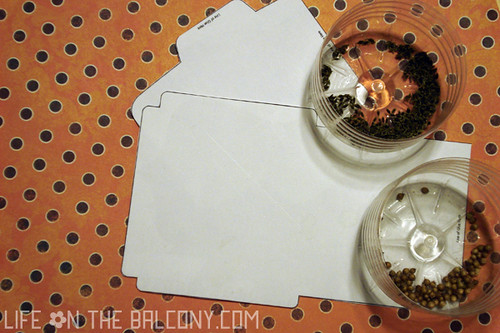
In the photo above I have some dilll and cilantro seeds, and the templates I photocopied from You Grow Girl by Gayla Trail. I am planning on using the orange and brown polka dot paper to make the seed packets.
Saving seeds is pretty easy. When the seed heads were fully formed but still green, I cut them from the plant. I then put them in a small plastic cup and let them air dry. When they were completely dry (it took about 10 days) I removed the stems and was left with what you see in the photo.
Making the seed packets is just as easy. You just trace the template on to the paper, cut, paste, and voila! You can make pretty packets out of patterned paper (check the scrapbooking section of your craft store; even Target has some neat scrapbooking papers) and then host a seed swapping party as Vanessa Richins suggests (anyone in So Cal want to meet at a Coffee Bean and Tea Leaf and swap seeds with me?).  http://lifeonthebalcony.com/sys-save-your-seeds/

Another Frugal Gardening Tip

I’m not even going to bother telling you that times are tough right now. We all know that. But what can frugal minded gardeners do about it?
Well, for starters, you can take cuttings from your existing plants and those of your friends and neighbors (with permission of course). Taking cuttings means free plants. I don’t know about you, but free sounds really good right about now.
These Coleus plants are all from a single plant I purchased for $3.99. When I bought the plant, I had in mind making topiaries, so I was really excited to find a plant with six branches. Immediately upon bringing the original plant home, I cut off the six branches, dipped the cut end in rooting hormone, and stuck the stems in fresh potting soil. A week or so later they were all growing roots. My four dollars bought me six attempts at making a topiary. Less than a buck a plant is pretty darn good!
Now, whenever I pinch off a branch growing too low down on my topiaries, I repeat the cutting process described above and get a new, free plant. I also do the same thing when I trim my mother’s geraniums. And I have had good results with Ivy and Philodendrons by just sticking a cutting in a glass of water until roots have developed.
Have you taken cuttings before? Which plants have you had success with?  http://lifeonthebalcony.com/another-frugal-gardening-tip/

10 Dirt Cheap Ways To Have a Gorgeous Balcony Garden

Gardening can be expensive if you don’t keep an eye on the bottom line. Even gardening in a small space can get out of hand. Here are some tips to keep the spending to a minimum without sacrificing style.
Free:
  1. Save seeds from plants you already have, from plants growing in the wild, or ask your friends for seeds from their plants. Your friends will be more willing to give you some of their seed if you offer up some of yours.
  2. Take cuttings. Again, consider your own plants, plants you find growing elsewhere, and offer to trade cuttings with your friends.
  3. Divide and conquer. If any of your plants are a bit over grown, you could divide them and offer to trade your gardening buddy for one of her divisions.
  4. Take a good hard look at your food. Did you just pick up a container of heirloom tomatoes from the Farmer’s Market? A couple of those tomatoes have enough seeds to make quite a few plants. Also, some plants can be started from leftovers. For example, a new pineapple plant can be started from the top portion you sliced off before eating it.
  5. As far as containers go, look around for things you are not using that can hold soil. Don’t pass by a possibility just because it doesn’t have a drainage hole. You can drill a hole into more materials than you’d think.
Pretty Darn Inexpensive:
  1. Seeds. Most seeds I’ve purchased cost me less than $2 per packet and come with enough seeds to make 50-100 plants. We’re talking a few cents per plant here!
  2. Cheap plastic and terra cotta pots can be improved with a little paint. I think the best effect is achieved when you spray paint a pot a bright color like fuchsia or lime green. Or use painter’s tape to make stripes. Just stay away from the faux finishes unless you’re a pro. A lot of amateur faux finish jobs look too faux, if you catch my drift.
  3. Shop yard sales in nice neighborhoods for their garden cast offs. This would be a great place to find pots, plants, tools, etc.
  4. Buy plants at the right time of year for the best deals. The best time to check for sales on annuals is just after Memorial Day. Buy perennials late in the season. You can get some pretty good deals on plants in September and October.
  5. Make your own fertilizer by composting your kitchen scraps. Both Juggling Frogs and You Grow Girl have discussed vermicomposting (composting with worms) recently, which can be done in the space underneath your kitchen sink, without any smell or hard work.  http://lifeonthebalcony.com/10-dirt-cheap-ways-to-have-a-gorgeous-balcony-garden/

Dirt-Cheap Ways to Grow a Garden

These days, it's money that makes a garden grow.
Gardening has long been one of the top leisure activities for many Americans. But green thumbs are finding that this hobby can quickly become quite expensive.
It doesn't have to be. With a little bit of effort and keeping an eye open for plants that are looking for a good home, you can fill your garden without emptying your wallet.
In fact, beautiful gardens can be created at a very low cost, and many plants can be obtained at no charge.
Here are 10 great ways to build your garden with plants that don't cost a dime:

1. Look for Unloved Plants


You probably think your local nursery will have the highest prices for garden plants. That's probably true if you are looking for plants in the main retail area. But frugal gardeners look behind the building to find free plants.
Plants that don't look healthy won't sell and take up valuable retail space, so they usually end up back by the trash bins. Most people who run nurseries hate to throw out any kind of plant -- no matter what condition it's in -- and will usually let you take any plant you'd like.
Simply ask the manager if there are plants that can't be sold, and if you may claim them. While they won't look as beautiful as those on the retail floor, these plants (especially any that are native to your area), with a little bit of care, can be nursed back to health in no time.

2. Bartering and Trading


If you want to be a little more choosy when it comes to plants for your garden, consider bartering with a neighbor. This works especially well if you have junk lying around the house that you no longer want or need.
The stuff doesn't even have to be garden-related. This is also a great way to get gardening tools and supplies that can cost a pretty penny when purchased brand new.

3. Plant Rescues


Simply keep your eyes open when driving down the street, especially on trash days. Many people move during spring and abandon their plants in the process.
While you are likely to find more houseplants this way than garden plants, they are still worth rescuing, even if you don't plan to keep them. These plant rescues are excellent for trading and bartering. While it may be an extra step, it still will allow you to get free plants.

4. The Internet


The Internet is a wonderful place to pick up free plants. FreeCycle will allow you to makerequests for free plants, which should get you plenty.
People who are moving who are a bit more organized will try to find homes for plants they won't be talking with them. Most gardeners love to share extraplants that they have when preparing their own spring gardens.
People who are doing new landscaping often have perfectly good plants that don't fit their new look that are in need of a new home. Free plants can also be found by placing wanted ads through CraigsList

5. Dig Your Own Plants


While this will take a little muscle work on your part, there are often offers by homeowners where you can take any plants that you dig yourself. These property owners need to get rid of plants for many reasons but don't want to put in the labor to dig up the plants themselves.
If you are willing to dig them up, they are yours for the taking. These can be found on Web sites such as CraigsList and in the classified section on local newspapers.

6. Landscaping Crews


An often overlooked place to find free plants for your garden is from landscaping crews. Landscaping crews are usually paid to keep landscape fresh and in season meaning that they often take out perfectly good plants that just happen not to be at their peak.
These plants usually are thrown out or composted even thoughthey are still in good condition, but the crews will often be willingto give you them for free if you ask.
This is especially true if they need to pay to haul them away. In this case, giving them away to you will actually save them money.
During spring you should be able to find crews alongside the road who you can ask, but you can also use the Internet or phone book to find local landscapers in your area to see if they have extra plants from jobs.

7. Gardening Friends


Friends who also garden can be a wonderful sourceof free plants for your garden. Most gardeners have extra plants thatthey are more than willing to give away.
Even if they don't have full plants to give away, most will have new starts from dividing their established plants or cuttings that can be used to begin growing new plants.

8. Participate in Community Garden Groups


If there is a local garden group that you can join, this is an excellent way to get free plants through other members and through projects that you may undertake.
It's also a great place to get quality gardening information and toget answers to all your gardening questions.

9. Join a Gardening Forum


If there are no garden groups in your community, another option is to join a gardening forum. The key to be successful in getting free plants is to be an active participant in the forum.
Most gardeners are more than happy to help out people whomthey have come to know, but many also takea dim view of those who pop in for the sole purpose of trying to getfree plants.

10. Keep an Eye Open for 'Volunteer' Plants


Your own garden may provide you with free plants that you never expected. Plants that grow unexpectedly from seed in the early spring are called "volunteerplants," because they volunteer to be part of your garden.
When they appear, these plants can be dug up and potted and then replanted in the garden when they grow bigger.
While creating a new look for your garden can be expensive, using the tips above can greatly reduce the costs while giving you a large variety of new plants to add to your garden this season.  http://www.thestreet.com/story/10409962/1/dirt-cheap-ways-to-grow-a-garden.html

How do I save tomato seeds?

Saving tomato seeds is not difficult, but you need to use open-pollinated varieties (as most heirloom tomatoes are) in order to have them grow true to type.
1. Start by taking the best tomatoes from a number of plants of that variety will give you a good genetic mix. They needn't be rotten, just ripe.
2. Cut the fruits in half at their waistlines, and squeeze their seeds into a labeled container such as a glass jar.
3. Add several inches of water to the jar and set it aside, out of direct sunlight but in a warm spot. A flotilla of fungal matter will form after a few days, but you may cover the jar to avoid the smell, deter fruit flies and prevent a tidy family member from throwing out the whole thing. Keep the lid loose, though, to encourage the fermentation that is the key to this little operation. The gel coating that has kept the seeds from germinating will break down, and any good, viable seeds will sink to the bottom. Stir from time to time.
4. After no more than five days, spoon off and discard the moldy debris on the surface, and pour off the water. Add fresh water to the seeds, stir and let them settle again. Do this until the seeds are clean, then drain them well in a fine strainer and spread them on a screen or a plate so that they'll dry quickly, out of the sun.
5. When they are absolutely dry and are easily separated with your fingers, they can be stored in an airtight jar or plastic bag and will keep for at least five years.
Source: Barbara Damrosch  http://kitchengardeners.org/questions/how-do-i-save-tomato-seeds

Monday, April 18, 2011

From the Garden…


A great way to save money on food is to grow your own, then can what you don’t or can’t eat. Then you have homegrown, preservative free foods for the rest of the year and until your garden is up and producing again.
An even better way to save money is to have family do this then share!
Dwayne brought home a baker’s dozen of assorted goodies on Friday after visiting his brother. We now have green beans, tomato sauce, and even some lovely venison (a great alternative to beef).  http://anneonlife.com/2010/11/15/mmm-mmm-good-the-way-to-ones-heart/

Self Help Health Miracles in Your Garden

 A great way to save money and take care of your health is to have your own herb garden. You can actually learn how to grow your own food and make it available for you anytime.

Few tasks can be more rewarding and therapeutic than growing and preparing your own herbs. These are, after all, fascinating plants as each comes with its own traditions and folklore.

More than that, it also comes with medicinal and culinary uses. Put them on a sunny windowsill so that they will survive.

Make sure that they get at least five hours of sun each day. A window facing south or southeast would be the best choice.

Position them away from drafts and use a soil-less potting mix to avoid diseases. Also make certain that the mix is light so that water drains out well.

A good herb to have is oregano. This is commonly used as a culinary herb, but there’s more to it than you think.

It has also been used medicinally for decades. Tea from oregano can treat indigestion, bloating, urinary problems, and bronchial problems.

It also relieves fever and diarrhea. If you’ve been a smoker all your life, you know that your lungs are now getting the care that they badly need.

Spinach is also something you can consider. It grows best with ample moisture and a fertile, well-drained soil.

Grown for its edible leaves, this vitamin enriched plant is a great source of calcium, iron, and protein. Think about the good you can do to your bones when you have spinach in your diet.

Osteoporosis is a big health issue among the older members of society. You can finally do your skeletal system a favor by giving it all the calcium it needs to stay strong.

Lastly, the mugwort. This has many uses and was traditionally utilized as a remedy for digestive disorders and a tonic for various ailments. It improves one’s digestion and increases appetite.

Keep this around if you are extremely sensitive about the food you eat. If you need to gain weight because you are constantly getting sick, consider putting mugwort in your diet.

While you now have free time in your hands, you need to make sure you optimize this. Try to enjoy the taste of herbs.

In fact, with the right combination, your food becomes tastier and eating becomes a more pleasant experience. Eliminate the excessive need for prescription drugs.

When it comes to your health, natural is still the best choice. Get to know your herbs better and try to see which one helps you most.

Do you want MORE out of life? We believe that YOU deserve the best! The best health. The most happiness. And unlimited prosperity too.
  http://www.personal-enterprise-self-help-resources.com/self-help-health-miracles-in-your-garden.html

Money Saving Tips for Your Garden

Save Money
Whoever said “dirt cheap” never went to Home Depot or Lowes for garden supplies. A coworker was talking not too long ago how he spent $700 on dirt for his vegetable garden!
Here are some tips to making the most out of your gardening dollar.
1. Buy plants in small quantities. You don’t need to plant the Amazon rain forest do you? Buy only what you can plant right away, don’t go over board especially when shopping for plants online even though they are cheap!
2. Settle on a few good internet order sources. The variety offered by mail-order catalogs is inspiring, but don’t overpay on shipping because you order from six companies every spring. Try Direct Gardening and Blooming Bulb just to name a few. These have never failed me, are incredibly cheap and have a huge varieties.
3. Use local sources for heavy items. The cost of shipping heavy items can usually be greater than the item itself. Organic fertilizer additives , like bone meal, green sand and composted animal manure, are cheap but can cost a ton to ship. Check out local sources before purchasing this stuff online.
4. Search out other retail outlets. Though it may seem like it, Lowes and Home Depot are not the only games in town. A bale of straw at a nursery is sold as mulch and priced like mulch, while a bale of straw at a farm store is priced as livestock bedding. Ill go with the livestock bedding!
5. Keep an Eye Out for free garden materials. Tree Limbs cleared from power lines are typically shredded. You can often get the mulch free from the utility company. Many community sanitation departments also give away compost made from leaves and organic waste.
6. Make friends with Pickup Truck owners. Delivery charges can really add up. Offer to fill up the tank, it will be cheaper!
7. Buy certain items in large quantities. You can buy large quantities of compost from or mulch from landscaping centers a lot cheaper than by the bag at the home stores. In fact, as much as 70% cheaper! Bark chips and other mulch also come cheaper when bought in bulk.

8. Go for the small plants. Opt for small online plants instead of expensive gallon containers at your local stores. Perennials don’t usually take off the first season you plant them. They need some time to settle in. The following spring, after a winters rest, perennials start to thrive and, typically both big and little plants alike will reach mature heights at the same time.
9. Purchase late in the season or after the spring rush. You can save over 50% buying stuff at the end of the season vs the beginning. Discounts on plants are common during fall sales. Plus, fall is one of the best time to plant.

10. Make your own gardening potions. A mixture of 1/3 ammonia and 2/3 water is deadly to slugs. See my aphid control article for, guess what, aphid control. Do research on other diy control methods.


11. Mulch your plants. If you live in a hot and dry climate, a thick layer of mulch will dramatically cut your watering bill. Regardless of location, mulch is one of your best allies against annoying and nasty weeds.
12. Make your own plants. Many perennials, like as sedums and many grasses, can be divided. Each will root. Don’t be afraid to divide the mature perennials already in your garden. Not only will it give you more plants, you will also be helping the existing ones out.
13. Save on garden gear. An over priced piece of gardening equipment does not usually make you a better gardener. The best tools are usually available for less than $10 at your local hardware store.  http://plantfiles.info/uncategorized/money-saving-tips-for-your-garden

Save Money With Your Edible Garden

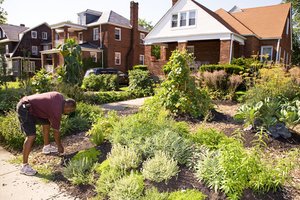
Whether you’re trying to pinch pennies on your grocery bill or just hungering to eat healthier, having your own edible garden is the answer. The beauty of tending a backyard vegetable patch is that you can pick and choose what to grow, allowing you to customize a mix that suits your family’s palate—and gives you the greatest return on investment.
How much can you save?

A backyard edible garden will trim costs from your grocery bill while providing you and your family with the freshest produce possible. According to Bruce Butterfield, research director for the National Gardening Association, a well-maintained garden can produce a half-pound of fresh vegetables for every square foot of garden space. At average market prices, that means a garden returns about $1 per square foot.
Studies conducted by W. Atlee Burpee Co., a mail-order seed company, are even more optimistic. According to Burpee, the average cost-to-benefit ratio of home-grown produce for those who have established gardens is better than 1 to 25. That means every $1 spent on seeds and supplies yields at least $25 worth of vegetables.
Even first-time gardeners will benefit. George Ball, owner of Burpee Co., says that a $10 investment in seeds for tomatoes, beans, bell peppers, lettuce, peas, and carrots, plus $80 for soil, fertilizer, and the cost of building several raised beds, can yield more than $250 worth of veggies and herbs—a substantial portion of the approximately $3,465 the average U.S. family spends on a year’s worth of groceries.
For families that save the harvest, either by freezing, canning, or drying, the cost-benefit ratio climbs even higher. Martha Garway, who tends a 10×10 plot in a Providence, R.I., community garden, freezes much of her summer produce, such as okra, tomatoes, and peppers.
That summer harvest, which costs her $20 for the plot plus the cost of seeds (and she tends to save her own), enables her to “buy only meat and fish through winter—no vegetables,” she says.

Top plants for great returns

For the average gardener in most regions of the country, here are some of the most cost-effective vegetables to grow, and an estimate of what you’ll save over store-bought produce. These figures reflect veggies harvested for fresh eating only; if you freeze or can produce to consume beyond the harvest season, your savings will multiply.
Slicing tomato
Seedling cost: $2.00/plant
Yield: 10-15 pounds tomatoes/plant
Savings: $15-$23/plant

Bell pepper
Seedling cost: $2.00/plant
Yield: 6-8 peppers/plant
Savings: $9-$12/plant
Cucumber
Seed cost: $2.95/packet of 240 seeds
Yield: 10-15 pounds of cucumbers per plant
Savings: $5-$7.50/plant
Bush green beans
Seed cost: $2.95/packet of seeds
Yield: 2.5-3 pounds/5-foot row
Savings: $3.75-$4.50/row
Pole green beans
Seed cost: $2.95/packet of seeds
Yield: 4-5 pounds/5-foot row
Savings: $6-$7.50/row
Leaf lettuce
Seed cost: $2.00/packet of mixed lettuces
Yield: 16 oz. of salad every 3-5 days after leaves mature
Savings: $4 per week
A few vining vegetables, like squash or Malabar spinach, produce abundant yields for the price of a packet of seeds ($2.95). Winter squash types in particular are easy to cure and store, lasting well into spring and offering savings of up to $10-$15 per vine.

Herbs

Herbs offer amazing return. For $1.50, you can buy a 3-inch pot of parsley, chives, oregano, mint, or basil and harvest leaves all season long. With the perennial herbs, like oregano and mint, the harvest continues for years with little maintenance action required. Compare that to “fresh” herbs you’ll get at the grocery for $3 for a 3-ounce packet.

What not to grow

Some vegetables aren’t cost-effective in an edible garden. For instance, you could spend $20 for organic seed potatoes that will yield 15 pounds of spuds from a 20-foot row planting. Compare that with the average price of white potatoes in the supermarket at $1 per pound. Then again, you can’t find Russian Banana fingerlings or Purple Viking potatoes at the grocer, so if you want a specialty spud, grow your own.
Other veggies that don’t pay to grow are ones that are finicky, like celery or asparagus. Both are labor intensive. Onions are relatively cheap to purchase, and it can be difficult to get a large yield of good-size bulbs without a massive garden.
Try growing shallots instead, a gourmet-style onion family member that produces green tops you can harvest like chives and mild flavored bulbs that cost up to $4 a pound at the store.

How big an edible garden?

The median size of an edible garden is about 100 sq. ft., according to the National Gardening Association. For a family of four, a growing space of 200 sq. ft. should keep the family in veggies all summer long. Plan to spend 4 hours a week tending your garden, with 8-12 hours for preparing the planting area in spring, shopping for seeds and seedlings, and sowing crops.   http://pheasantwalk411.com/?p=376

Thursday, April 7, 2011

Save Money with Your Edible Garden

An edible garden featuring vegetables and herbs can save you a bundle if you keep it simple and raise plants that offer high yields.

 
Whether you’re trying to pinch pennies on your grocery bill or just hungering to eat healthier, having your own edible garden is the answer. The beauty of tending a backyard vegetable patch is that you can pick and choose what to grow, allowing you to customize a mix that suits your family’s palate—and gives you the greatest return on investment.

How much can you save?

A backyard edible garden will trim costs from your grocery bill while providing you and your family with the freshest produce possible. According to Bruce Butterfield, research director for the National Gardening Association, a well-maintained garden can produce a half-pound of fresh vegetables for every square foot of garden space. At average market prices, that means a garden returns about $1 per square foot.
Studies conducted by W. Atlee Burpee Co., a mail-order seed company, are even more optimistic. According to Burpee, the average cost-to-benefit ratio of home-grown produce for those who have established gardens is better than 1 to 25. That means every $1 spent on seeds and supplies yields at least $25 worth of vegetables.

Even first-time gardeners will benefit. George Ball, owner of Burpee Co., says that a $10 investment in seeds for tomatoes, beans, bell peppers, lettuce, peas, and carrots, plus $80 for soil, fertilizer, and the cost of building several raised beds, can yield more than $250 worth of veggies and herbs—a substantial portion of the approximately $3,465 the average U.S. family spends on a year’s worth of groceries.

For families that save the harvest, either by freezing, canning, or drying, the cost-benefit ratio climbs even higher. Martha Garway, who tends a 10x10 plot in a Providence, R.I., community garden, freezes much of her summer produce, such as okra, tomatoes, and peppers.

That summer harvest, which costs her $20 for the plot plus the cost of seeds (and she tends to save her own), enables her to “buy only meat and fish through winter—no vegetables,” she says.

Top plants for great returns

For the average gardener in most regions of the country, here are some of the most cost-effective vegetables to grow, and an estimate of what you’ll save over store-bought produce. These figures reflect veggies harvested for fresh eating only; if you freeze or can produce to consume beyond the harvest season, your savings will multiply.

Slicing tomato
Seedling cost: $2.00/plant
Yield: 10-15 pounds tomatoes/plant
Savings: $15-$23/plant

Bell pepper
Seedling cost: $2.00/plant
Yield: 6-8 peppers/plant
Savings: $9-$12/plant

Cucumber
Seed cost: $2.95/packet of 240 seeds
Yield: 10-15 pounds of cucumbers per plant
Savings: $5-$7.50/plant

Bush green beans
Seed cost: $2.95/packet of seeds
Yield: 2.5-3 pounds/5-foot row
Savings: $3.75-$4.50/row

Pole green beans
Seed cost: $2.95/packet of seeds
Yield: 4-5 pounds/5-foot row
Savings: $6-$7.50/row

Leaf lettuce
Seed cost: $2.00/packet of mixed lettuces
Yield: 16 oz. of salad every 3-5 days after leaves mature
Savings: $4 per week

A few vining vegetables, like squash or Malabar spinach, produce abundant yields for the price of a packet of seeds ($2.95). Winter squash types in particular are easy to cure and store, lasting well into spring and offering savings of up to $10-$15 per vine.

Herbs

Herbs offer amazing return. For $1.50, you can buy a 3-inch pot of parsley, chives, oregano, mint, or basil and harvest leaves all season long. With the perennial herbs, like oregano and mint, the harvest continues for years with little maintenance action required. Compare that to “fresh” herbs you’ll get at the grocery for $3 for a 3-ounce packet.

What not to grow

Some vegetables aren’t cost-effective in an edible garden. For instance, you could spend $20 for organic seed potatoes that will yield 15 pounds of spuds from a 20-foot row planting. Compare that with the average price of white potatoes in the supermarket at $1 per pound. Then again, you can’t find Russian Banana fingerlings or Purple Viking potatoes at the grocer, so if you want a specialty spud, grow your own.

Other veggies that don’t pay to grow are ones that are finicky, like celery or asparagus. Both are labor intensive. Onions are relatively cheap to purchase, and it can be difficult to get a large yield of good-size bulbs without a massive garden.

Try growing shallots instead, a gourmet-style onion family member that produces green tops you can harvest like chives and mild flavored bulbs that cost up to $4 a pound at the store.

How big an edible garden?

The median size of an edible garden is about 100 sq. ft., according to the National Gardening Association. For a family of four, a growing space of 200 sq. ft. should keep the family in veggies all summer long. Plan to spend 4 hours a week tending your garden, with 8-12 hours for preparing the planting area in spring, shopping for seeds and seedlings, and sowing crops.

Julie Martens is a writer with 21 years’ experience in the field of gardening. Her bylines appear in magazines such as Nature’s Garden, Country Gardens, and Garden Ideas & Outdoor Living. She recently moved into a renovated 1915 home and is busily working on a new garden.
  http://www.houselogic.com/articles/save-money-your-edible-garden/